History
World War One
Basic Dates
- War began: July 28, 1914
- Ceasefire: November 11, 1918
- Treaty of Versailles signed: June 28, 1919
Statistics
- Almost 8 million people died
- Approximately 22 million people were injured
Causes of World War I (MANIA)
- M – Militarism
- A – Alliances
- N – Nationalism
- I – Imperialism
- A – Assassination
Militarism
Militarism is the ideology of building up a nation’s army to be prepared for war. World War I was the first war to use advanced tactics and weaponry.
- Countries expanded both armies and navies
- Germany and Britain competed in a naval arms race
- European nations raced to develop weapons of mass destruction
Alliances
Two major alliances formed in Europe before World War I:
| Alliance | Members | Description |
|---|---|---|
| Triple Alliance | Germany, Austria-Hungary, Italy | Agreed to defend one another in case of conflict |
| Triple Entente | Russia, France, Great Britain | Looser agreement that surrounded the Triple Alliance |
Italy
- 1911: Italy requested military aid during the Italo-Turkish War, but was refused
- 1914: Italy remained neutral when WWI began
- 1915: Italy joined the Allies after signing the Treaty of London
- Italy wanted territories controlled by Austria-Hungary
Nationalism
Nationalism is an ideology based on strong pride and devotion to one’s nation.
- In Serbia, a nationalist group called the Black Hand formed
- The group aimed to create a Greater Serbia through violence
Imperialism
Imperialism is the policy of increasing a country's power through colonization.
- Britain, Germany, and France sought foreign markets after industrialization
- Competition for African territories increased tensions
- Conflicts arose in North Africa between France, Germany, and Britain
- The Balkans, Russia, and Austria-Hungary competed for influence in the Middle East
Assassination
On June 28, 1914, Archduke Franz Ferdinand of Austria-Hungary and his wife, Duchess Sophie, were assassinated in Bosnia.
- The attack was carried out by members of the Black Hand
- The group believed Bosnia should belong to Serbia
- There were two assassination attempts on the same day
- The successful assassin was Gavrilo Princip
Domino Effect
- Austria-Hungary blamed Serbia for the assassination
- Germany pledged full support to Austria-Hungary
- Nations declared war as alliances activated
Major Powers
| Central Powers | Allied Powers |
|---|---|
| Germany | Russia |
| Austria-Hungary | France |
| Ottoman Empire | Great Britain |
| Bulgaria | Italy, Japan, United States (1917) |
Austria-Hungary → Serbia → Germany ↔ Austria-Hungary → Russia ↔ Serbia → France ↔ Russia → Germany invades Belgium → Great Britain ↔ Belgium
Trench Warfare
- Trenches were dug by both sides and protected with barbed wire and mines
- They were 6–8 feet deep and stretched from the English Channel to Switzerland
- Soldiers lived underground in elaborate defense systems
- British and French trenches were muddy and disease-ridden
- German trenches were often permanent and had electricity or running water
- Trench warfare caused diseases such as trench foot
United States Entry into the War
Initially, the United States remained neutral due to diverse immigrant loyalties and President Wilson’s desire to avoid foreign conflict.
- The US supplied weapons to both sides, earning massive profits
- Key reasons for entry included the Lusitania sinking and the Zimmermann Telegram
- American military power helped secure an Allied victory
Lusitania
- British passenger ship with 1,960 passengers, over 100 Americans
- International law required warnings before attacking civilian ships
- Germany attacked without warning on May 7, 1915
- 1,198 people were killed, including 128 Americans
- Germany claimed the ship carried ammunition (still debated)
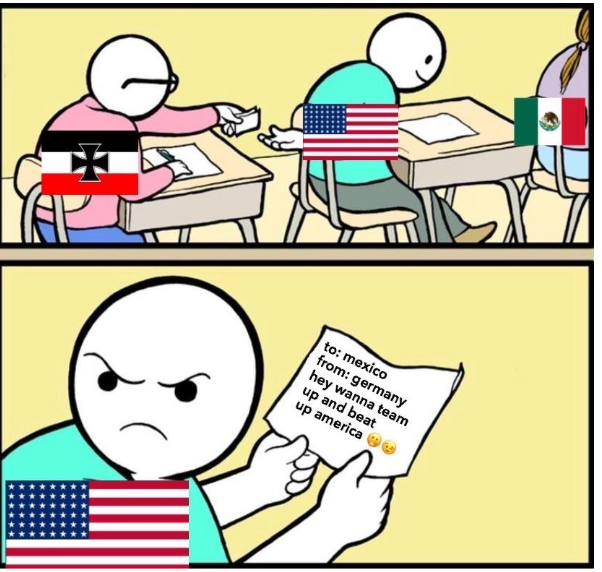
Zimmermann Telegram
The Zimmermann Telegram was a secret German message sent to Mexico in January 1917.
- Intercepted by Britain and revealed in March 1917
- Germany offered Mexico an alliance against the US
- Mexico was promised Texas, New Mexico, and Arizona if Germany won
Other World War I Treaties
St. Germain (1919)
- Signed in 1919
- Between Austria and the Allies
- Led to the breakup of Austria-Hungary into multiple independent nations
Neuilly (1919)
- Signed in 1919
- Between Bulgaria and the Allies
- Punished Bulgaria for fighting on the side of the Central Powers
Trianon (1920)
- Signed in 1920
- Between Hungary and the Allies
- Formalized Hungary’s status after the breakup of Austria-Hungary
Sèvres (1920)
- Signed in 1920
- Between the Ottoman Empire and the Allies
- Led to the separation and collapse of the Ottoman Empire
The Treaty of Versailles
The Treaty of Versailles was the formal peace treaty that ended World War I. Its terms were heavily influenced by U.S. President Woodrow Wilson’s Fourteen Points.
- Germany was not allowed to attend the negotiations
- The treaty was signed in the Hall of Mirrors at the Palace of Versailles
Key Leaders and Aims
| Leader | Country | Aims |
|---|---|---|
| Woodrow Wilson | United States | Prevent future wars, avoid blaming Germany, and establish the League of Nations |
| Georges Clemenceau | France | Punish Germany, regain Alsace-Lorraine, weaken Germany militarily, demand reparations, and create an independent Rhineland |
| David Lloyd George | Great Britain | Punish Germany enough to satisfy the public but keep Germany strong enough for trade, gain land for Britain, and protect naval dominance |
Terms of the Treaty of Versailles
- Germany was declared guilty of aggression and blamed for the war
- Germany was required to pay reparations to the Allies
- France regained Alsace-Lorraine
- Germany lost parts of its pre-war territory
- The Saar coal mines were given to France
- German colonies were transferred to the Allies
- The German army was limited to 100,000 soldiers and naval power was restricted
- Belgium, Poland, Yugoslavia, and Czechoslovakia had their independence confirmed
- The Covenant of the League of Nations was included
Consequences of the Treaty
- Germany lost 13% of its land
- 15% of agricultural land and 10% of industry were lost
- Approximately 6 million Germans were displaced
- Germany experienced hyperinflation due to excessive money printing
League of Nations
The League of Nations was an international organization established on January 10, 1920. It is considered the predecessor of the United Nations.
Aims of the League
- Maintain international peace
- Encourage cooperation and trade between nations
- Improve living and working conditions
- Prevent future wars
Structure
- The Council
- The Assembly
- The Secretariat
Powers and Limitations
- Could condemn countries and impose trade embargoes
- Could organize humanitarian aid
- Had no standing army to enforce decisions
Membership
- USA never joined the League
- Germany, Russia, and China were initially excluded
- Germany and the USSR joined later
- Japan and Germany later withdrew
League Successes
- Freed slaves and prisoners of war
- Regulated drugs
- Provided aid during economic collapse
- Helped prevent the spread of disease
Conflict Resolution Examples
- Aaland Islands (1921): Given to Finland but demilitarized
- Upper Silesia (1921): Split between Germany and Poland
- Greece–Bulgaria: Greece was ordered to withdraw and pay a fine
League Failures
- Global cooperation declined after the Great Depression
- Rise of fascist and militaristic governments
- Failed to stop Japan in Manchuria
- Failed to stop Italy in Abyssinia
- Failed to stop German expansion into Czechoslovakia
The League of Nations ultimately failed due to weak enforcement powers, limited membership, economic pressures from the Great Depression, and unequal power among member states.
Unit 2: Superpowers, Empires and Institutions
The Cold War (1945–1991)
- A war of ideologies
- Communism vs Capitalism
- Main rivals: USA vs USSR
- No direct fighting between the two superpowers
- Conflict occurred through proxy wars and influence over other countries
Key Ideologies
Communism
- Economic and social system
- All property and resources are owned collectively
- Controlled by the government or society
Capitalism
- Economic system based on free markets
- Little to no government interference
- Property and businesses are privately owned
Superpower Comparison
| USA | USSR |
|---|---|
| Democratic, capitalist nation | One-party communist dictatorship |
| Wealthiest country | Economic superpower |
| Private ownership of business and property | State-controlled economy |
| Great wealth and great poverty | Low unemployment and poverty |
| Strongly anti-communist | Strongly anti-capitalist |
Before the Cold War
- The Bolsheviks overthrew the Russian government
- 1922: Formation of the communist USSR
- The USA refused to recognize the USSR until 1933
- Tensions developed near the end of WWI
- Each side portrayed the other as dangerous and evil
World War II Alliance
- The USA and USSR allied during WWII
- The alliance was based on a shared enemy: Nazi Germany
- Stalin believed the USSR made the greatest sacrifices in defeating the Nazis
Causes of the Cold War
Ideological Differences
Fundamental disagreement between communism and capitalism.
Sovietization (1944–1948)
- Stalin aimed to bring Eastern European countries under Soviet control
Truman Doctrine (1947)
- US policy to help war-affected European nations resist communism
The Marshall Plan (European Recovery Program)
- Over $13 billion in aid to rebuild Western Europe
- Offer extended to Eastern Europe and the USSR
- The USSR rejected the aid
Soviet Occupation of Eastern Europe
- Soviet troops remained in Eastern Europe after WWII
- Established communist governments
The Iron Curtain
- Term used by Winston Churchill
- Divided Eastern (Soviet-aligned) and Western (US-aligned) Europe
- Limited contact between communist and non-communist states
Division of Germany
- Germany split into four zones: USA, Britain, France, USSR
- Berlin was also divided into four zones despite being in the Soviet zone
Policy of Containment
A geopolitical strategy used by the USA to prevent the spread of communism and isolate the Soviet Union.
Yalta Conference (February 1945)
- Held at Livadia Palace near Yalta, Crimea
- Attended by the Big Three: Stalin, Roosevelt, Churchill
- Planned post-war Europe after Germany’s defeat
Key Decisions
- Germany would be divided into occupation zones
- Nazi war criminals would be hunted and punished
- Liberated countries could hold free elections
- The Big Three would join the United Nations
- Eastern Europe recognized as a Soviet sphere of influence
- Poland’s borders shifted westward
- USSR demanded heavy reparations from Germany
Potsdam Conference (1945)
- Held in Potsdam, Berlin
- Leaders: Stalin, Truman, Churchill (later Clement Attlee)
Agreements
- Germany to be demilitarized
- Military-related industry dismantled
- No German military or paramilitary forces
- Nazi laws removed
- Authoritarian influence removed from education and courts
Disagreements
- Future of Germany
- Severity of reparations
- Soviet policies in Eastern Europe
Soviet Occupation of Eastern Europe
- Soviet troops liberated Eastern Europe from Nazi control
- Troops remained to enforce Soviet influence
- Communist governments established in Poland and surrounding states
- Stalin justified this as a defensive strategy
NATO (North Atlantic Treaty Organization)
- Founded in 1949
- Established by the USA
- Originally 12 members
- Included USA, Britain, France, Italy, Belgium, Denmark, Portugal, West Germany
- Formed as a defensive alliance
- USA held nuclear monopoly at the time
Warsaw Pact
- Formed in 1955
- Created in response to West Germany joining NATO
- Included USSR, Poland, Hungary, Czechoslovakia, Romania, East Germany
- Presented as a defensive alliance
- Used by the USSR to maintain control over Eastern Europe
Hungarian Uprising (1956)
- The communist government in Hungary was overthrown
- Hungary announced plans to leave the Warsaw Pact
- The USSR invaded Budapest
- The communist government was reinstated
- Western support for the USSR declined
NATO vs Warsaw Pact
| NATO | Warsaw Pact |
|---|---|
| Separated territories | Geographically connected territories |
| Shared decision-making | Controlled by Moscow |
| Overall military superiority | Used to enforce Soviet control |
Berlin Blockade
- 1948: The Soviet Union attempted to limit French, British, and US influence in Berlin
- The USSR blockaded Western-controlled sectors of Berlin
- June 1948: Britain and the USA organized the Berlin Airlift to supply West Berlin
- The blockade was lifted on May 12, 1949
- 1949: The USSR successfully tested its first atomic bomb
- This was the first major confrontation of the Cold War
- The Berlin Wall was built in 1961 to prevent East Germans from fleeing
- 1961: Khrushchev and JFK met in Paris to discuss Berlin
- The Berlin Wall was torn down in 1989
Cuban Missile Crisis
- US businesses dominated much of the Cuban economy
- The US maintained a military base at Guantanamo Bay
- 1959: Fidel Castro overthrew US-backed dictator Batista
- Castro nationalized US-owned industries
- Cuba became a communist state
- The US cut diplomatic ties with Cuba
- April 1961: 1,400 anti-Castro exiles attempted an invasion (Bay of Pigs)
- Autumn 1962: The USSR placed missiles, troops, and military equipment in Cuba
- Cuba became a launch base for Soviet intercontinental missiles
Soviet Motives
- Khrushchev wanted to test President Kennedy’s strength
- He hoped to bargain over US missiles in Europe
US Response
- US intelligence discovered missile sites and Soviet ships
- The US raised the issue at the United Nations
Kennedy’s Options
- Air strike
- Negotiations
- Military blockade
- Invasion of Cuba
- Use of nuclear weapons
Vietnam War
- France colonized Vietnam in the 1800s
- Nationalist movements emerged in the early 1900s
- The Viet Minh, led by Ho Chi Minh, became the most prominent group
- During WWII, Japan occupied Vietnam
- 1945: Japan surrendered and Ho Chi Minh declared Vietnam independent
- France returned, and Ho Chi Minh sought US support
- The US supported France due to Cold War fears
Division of Vietnam
- 1954: France was defeated at Dien Bien Phu
- The Geneva Accords divided Vietnam into North and South
- Division was meant to be temporary with elections in 1956
- The US supported Ngo Dinh Diem in South Vietnam
- Diem cancelled elections and declared the Republic of Vietnam
- Diem’s regime was corrupt but supported by the US
Escalation
- 1962: JFK sent military advisors to South Vietnam
- 1963: The US supported a coup against Diem
- 1964: Gulf of Tonkin incident involving US Navy ships
- The Gulf of Tonkin Resolution allowed US military escalation
- 1965: Sustained bombing of North Vietnam began
Tet Offensive (1968)
- Launched by North Vietnam and the Vietcong
- Nearly 80,000 fighters attacked over 100 cities
- Targets included US bases and the US Embassy
- Public support for the war collapsed
US Withdrawal
- Large anti-war movement in the US (1969)
- Nixon claimed a “silent majority” supported the war
- US troops were gradually withdrawn
- The war effort was handed to South Vietnam
- US bombed Vietcong targets in Cambodia and Laos
- 1973: Ceasefire signed and US troops left
- 1975: South Vietnam fell and Vietnam was reunified under communism
Korean War
- 1950–1953
- Japan occupied Korea from 1895 until WWII
- After WWII, Korea was divided at the 38th Parallel
| North Korea | South Korea |
|---|---|
| Communist dictatorship | Capitalist democracy |
| Led by Kim Il-Sung | Led by Syngman Rhee |
| Supported by USSR and China | Supported by USA and the UN |
- 1950: North Korea invaded South Korea
- The UN intervened, led by the USA
- General Douglas MacArthur commanded UN forces
- 1950: UN troops landed at Inchon
- China entered the war after UN forces advanced north
- July 27, 1953: Armistice signed
- A 4km-wide Demilitarized Zone (DMZ) was created
- No formal peace treaty was ever signed
Fall of the Soviet Union
- The USSR spent heavily supporting communism abroad
- Large expenses from the Arms Race and Space Race
- From 1986, funding to satellite states was reduced
- Eastern European nations overthrew communist governments
- Mikhail Gorbachev introduced reforms
Glasnost
- Greater government transparency
- Increased freedom of speech and press
Perestroika
- Economic restructuring
- Limited private ownership of businesses
The Soviet Union officially dissolved in 1991.
Key Figures in Ending the Cold War
- Mikhail Gorbachev: Introduced Glasnost and Perestroika
- Ronald Reagan: Worked with Gorbachev and called for the Berlin Wall’s removal
- George H. W. Bush: Continued improving US–Russian relations
- Boris Yeltsin: Elected President of Russia
United Nations
- Formed in 1945 after World War II
- Nations signed the UN Charter outlining rights and obligations
- The UN officially came into existence on October 24, 1945
- October 24 is celebrated as United Nations Day
Urbanisation, Power & Social Change
1. Haussmannisation of Paris
What is Haussmannisation?
Haussmannisation refers to the large-scale redevelopment of Paris carried out between 1853–1870 by Baron Georges-Eugène Haussmann under Napoleon III.
Key Features
- Wide boulevards replacing narrow medieval streets
- Improved sewage and water systems
- Large public parks (e.g. Bois de Boulogne)
- Uniform building styles
- Improved street lighting and ventilation
Reasons
- Improve public health and reduce disease
- Control riots through easier army movement
- Modernize Paris
- Improve trade and transport
Effects
Positive
- Reduced spread of disease
- Improved transport networks
- Modern city image
Negative
- Working-class people displaced to outskirts
- Loss of historic neighbourhoods
- Increased social inequality
Comparison with London
- London was not centrally planned like Paris
- Urban improvements occurred gradually
- Main focus was sanitation after cholera outbreaks
- Less forced displacement compared to Paris
2. Regency London (Early 19th Century)
What was Regency London?
The Regency period (1811–1820) was when Prince Regent George IV ruled Britain.
Characteristics
- Expansion of London westwards
- Planned developments such as Regent Street and Regent’s Park
- Elegant architecture
- Sharp contrast between rich and poor
Social Reality
- Upper classes lived in clean, spacious areas
- Poor lived in overcrowded slums
- Poor sanitation and disease were widespread
3. PPP Model (Public–Private Partnership)
Definition
A Public–Private Partnership (PPP) is a system where governments and private companies cooperate to develop infrastructure.
Use in History
- Railways
- Housing
- Transport systems
Strengths
- Faster development
- Shared financial burden
- Use of private expertise
Weaknesses
- Profit prioritized over people
- Poor communities often excluded
- Limited government control
4. Effects of the Industrial Revolution
London
- Rapid urbanisation
- Factory expansion
- Overcrowded slums
- Pollution and disease
- Growth of a new middle class
Bombay (Mumbai)
- Expansion of textile mills
- Large-scale migration of workers
- Housing shortages
- Growth of informal settlements
5. Bombay Development & Land Reclamation
Why Land Reclamation?
- Bombay was originally seven islands
- Need for space for ports, railways and mills
Major Projects
- Hornby Vellard Project
- Filling marshy land
- Connecting the islands
Impact
- Expansion of the city
- Industrial growth
- Environmental damage
- Increased inequality
6. Growth of Indigenous Communities
Who were Indigenous Communities?
Local populations living in Bombay before industrialisation, including fisherfolk and artisans.
Impact of Urban Growth
- Loss of land
- Forced relocation
- Loss of traditional livelihoods
- Cultural marginalisation
7. Migration
Causes
- Industrial job opportunities
- Rural poverty
- Famines
- British colonial economic policies
Effects
- Rapid population growth
- Overcrowding
- Cultural diversity
- Housing shortages
8. Changes in Lifestyle
Working Class
- Long working hours
- Poor living conditions
- Shared facilities
- Limited healthcare
Middle & Upper Class
- Improved housing
- Leisure activities
- Better hygiene
- Access to education
9. Changes in City Planning
- Introduction of zoning
- Separation of industrial and residential areas
- Planned roads and railways
- Improved sanitation systems
10. Development of Chawls
What are Chawls?
Chawls were multi-storey residential buildings built to house industrial workers in Bombay.
Features
- Small single-room homes
- Shared toilets
- Narrow corridors
- High population density
11. Living in a Chawl
- Limited privacy
- Strong community bonds
- Shared water taps
- Noise and overcrowding
- Collective celebration of festivals
Renaissance & Reformation
12. The Renaissance
The Renaissance was a period of cultural rebirth in Europe from the 14th to 17th century.
13. Causes of the Renaissance
- Fall of Constantinople
- Wealth from trade
- Patronage by families like the Medici
- Decline of feudalism
- Growth of humanism
14. Art & Architecture
Art
- Realism
- Perspective
- Human anatomy
- Leonardo da Vinci, Michelangelo, Raphael
Architecture
- Symmetry
- Domes and columns
- Inspired by Greek and Roman styles
15. Renaissance Literature
- Focus on human experience
- Written in local languages
- William Shakespeare, Dante, Machiavelli
16. The Reformation
A religious movement challenging the authority of the Catholic Church. This led to a massive ideological shift from catholism to secularism and protestantism
17. Martin Luther
- He was a german monk
- Criticised Church corruption
- Published the 95 Theses (1517)
- Led to Protestantism
18. Indulgences
- Payments to reduce punishment for sins
- Exploited the poor
- Triggered reform movements
So you see.....A LIGHTNING STORM TOOK PLACE! In fear for his life he prayed to St. Anna for his life, offering to become a german monk in return- well he survived so he became a monk.
Exocommunication
After his
In Wartburg Castle, Luther would translate the new testament to German to make biblical teachhing accessible. This would actually lead to religious warfare that took place until the 1600s. This warfare took place between the protestant (beleived faith alone can lead to salvation, removed faith from the church) church and the catholic church (believed that following the pope would be the only path to true salvation)
Healthcare Systems in India: Ayurveda
The word “ayurveda” comes from the Sanskrit word for “science of life”. The practice of ayurveda is based on the idea of the existence of three doshas, or types of energy, similar to the concept of the four humours in Ancient Greece. The three doshas are the vata dosha, pitta dosha, and kapha dosha.
Doshas are supposedly responsible for the various aspects and preferences of each person, determining their emotional strengths and weaknesses, the foods best suited for their body, and the most effective exercises for them to practice. If these doshas fall out of balance, the person falls ill. Ayurveda utilizes exercise, mental health techniques, and nutrition science to restore a person’s balance.
The vata dosha is responsible for movement, like blood flow, flexibility, breathing, and movement of muscles and joints.
The pitta dosha literally translates to “fire”, and is responsible for metabolism, digestion, and combustion within the body.
The kapha dosha controls lubrication and endurance, and essentially “holds” everything together. It affects your muscles, ligaments, and even basic cells.
Up to 80% of the population in India and Nepal use ayurveda as a means of treatment, and it is holistic, meaning it aims to treat the whole body along with the mental state of a person, rather than just certain symptoms.
Benefits:
- Cheap: Compared to services offered by private hospitals, ayurvedic practices are affordable for people of most, if not all income groups.
- Minimally invasive: Ayurveda relies on nutrition, exercise, and orally consuming certain drugs and substances. It doesn’t require surgery, which makes it a safer procedure than most others offered by modern medical science.
- Does actually work (to an extent): Ayurvedic herbs such as garlic, guggulu, and black cumin did lower cholesterol levels in individuals with high cholesterol, as found by one study, with very few side effects. This could make them better than drugs prescribed in modern medicine, which often have severe side effects. Herbs like ashwagandha do help in lowering anxiety, while those like bacopa do improve cognitive abilities, like reaction time.
Drawbacks:
One thing to keep in mind while considering the drawbacks of ayurveda is that it has not been adequately studied from a Western point of view. Thus, certain sources may present ayurveda as worse than it actually is, failing to consider both sides of the argument.
- Heavy metals: Lead, arsenic, and mercury have been found in various ayurvedic medicines, which are toxic to the human body. However, these may not be part of the original compounds and may have ended up in these medicines through contamination and poor manufacturing standards.
- Allergies: Some people may have allergies to certain ingredients used in ayurveda, which can be fatal or worsen their condition.
- Accidental poisoning: There is no prescribed dosage for ayurveda, hence, there is always a risk of overdosing on the herbs prescribed for treatment.
The Charak Samhita
The Charak Samhita is an ancient Indian text written entirely in Sanskrit on ayurveda. Within its 120 chapters, it details early ideas about the spread and cause of diseases, the impact of nutrition on human health, and even modern diseases such as tuberculosis and arthritis.
The Charak Samhita is to ayurveda what the Holy Bible is to Christians, and is divided into 8 sections, each with a varying number of chapters.
Sutrasthana
The first section, or sutrasthana, provides a basic definition of ayurveda, when to use it, preparations to be made before beginning treatment, and the various types of medication to be administered during the treatment process. It also goes into detail about the different methods of food preparation and how these, along with the constituent ingredients, affect the human body. Finally, it informs the reader about the equally important roles of the doctor, the patient, the nurse, and the medicine during treatment.
Nidana Sthana
The second section, or nidana sthana, provides an overview of the symptoms, prognosis, and modes of transmission of eight conditions: fever, bleeding disorders, diabetes, abdominal lumps, leprosy, tuberculosis, epilepsy, and insanity.
Vimana Sthana
The third section, or vimana sthana, considers nutrition and epidemic science, along with the various empirical techniques a doctor must use when examining a patient and arriving at a diagnosis– a list of ethics for doctors published almost two centuries before the Hippocratic Oath. It lists around 20 different types of disease-causing parasites found both outside and within the body.
Sharira Sthana
The fourth section, or sharira sthana, examines the anatomy and physiology of the human body, along with the development of the embryo during pregnancy and factors affecting one’s lifespan.
Indriya Sthana
The fifth section, or indriya sthana, assumes the prognosis of diseases based on factors such as the dreams a patient may have along with the five senses including taste, touch, and smell. It supplies meanings for 7 common types of dreams. Finally, it explains signs and causes of sudden death.
Chikitsasthana
The sixth section, or chikitsasthana, further describes certain types of diseases and their treatments.
Kalpasthana
The seventh section, or kalpasthana, goes on about the composition of medicines that induce vomiting.
Siddhisthana
The eighth section, or siddhisthana, concludes with the dangers of administering medicine improperly.
Yoga
Though the definition of yoga varies from culture to culture, the broadest definition for it is “a series of specified techniques that require controlling the body and mind for achieving peace and stability.”
Yoga in India, where it originated, is somewhat different from yoga in the West. In India, yoga is viewed as a philosophy, with the scholar Patanjali laying out the eight basic stages of yoga to achieve salvation. These eight stages include both physical and mental techniques, such as asana, which refers to proper posture, dhyana, which refers to meditation and concentration, and pranayama, which specifies a series of breathing exercises. Traditional yoga focuses on inward reflection and spirituality.
However, in the West, yoga is commonly associated with a single style known as “hatha yoga”, which focuses primarily on physical activity and exercise for boosting flexibility and strength. There is a larger emphasis on asanas, pranayama, and meditation in comparison to other aspects.
Benefits:
- Yoga promotes better posture through various poses as well as meditation.
- Yoga develops flexibility as several poses are designed to stretch muscles. A study conducted in 2019 found that yoga delayed the loss of and built flexibility in older people.
- Yoga strengthens the cardiovascular system through breathing exercises such as pranayama and meditation, which control the pace of breathing and improve heart and lung health.
- Yoga helps people sleep better due to the calming effect it has on the mind and the exertion of the body, similar to the relaxation of muscles after exercise.
- Rituals of yoga such as meditation, breathing techniques, and chanting, reduce stress.
- Yoga is a low-cost exercise as it doesn’t require costly equipment, only a yoga mat and sufficient space.
Drawbacks:
- Yoga is not a cure-all for diseases. It can help strengthen the body but it cannot cure pre-existing diseases or conditions, and should not be a replacement for treatment from a certified medical professional.
- Yoga can be dangerous if not practiced properly. Doing poses in the incorrect manner, or performing difficult poses if you’re not in the right physical condition to do so, can seriously injure your muscles and strain them.
- Yoga is not for everyone, as individuals with health conditions such as osteoporosis (having reduced bone density) may lack the strength required to perform the poses.
Unani
Despite being an ancient method of treatment used in South Asia, including India, many of the beliefs and theories that govern unani practices originate from ancient Greek ideas, such as the theory of the four humours (the body is made up of four liquids, or humours: black bile, yellow bile, blood, and phelgm).
Practitioners of unani are called hakims.
Unani utilizes natural remedies like herbs, animal products, and minerals, with almost 2,000 medicines derived from these sources.
It also considers the role an individual’s diet might play in their wellbeing– this was called dietotherapy. The ideal diet is one that has plenty of nutrients with little roughage, such as porridges like dalia and dishes like kheer.
The core belief behind unani is that the overall health of an individual depends on 7 characteristics: the elements (arkan), temperament (mizaj), the bodily humours (akhlat), organ systems (aaza), vital spirit (arwah), individual power (quwa), and function (afaal).
An individual’s temperament, or mizaj, is determined by whether the elements that constitute it are balanced. Should they be out of balance, one’s temperament, and by extent, health, will be compromised.
Benefits:
The effectiveness of certain elements of unani medicine were scientifically proven by Indian physician Ajmal Khan in the 1920s. This was followed up by Indian-born scientist Salimuzzaman Siddiqui in the 1930s,who isolated chemical compounds from the plant Rauwolfia serpentina, colloquially known as “chotta chand”.
These compounds were shown to contain reserpine, a compound commonly used in modern medicine as a sedative and to lower high blood pressure. Chotta chand was used by hakims for the same purpose of relieving stress, proving there was indeed scientific reasoning behind ancient practices.
Furthermore, the use of natural remedies is more eco-friendly than manufactured drugs, and generally less intrusive than modern medical procedures.
Drawbacks:
Certain unani remedies are made of toxic compounds such as heavy metals. One such example is kushta, a powder made of mercury, arsenic, and mercuric chloride. Thus, the Indian Medical Association (IMA) declared that practitioners of unani without the proper certifications are “quack doctors”.
Siddha
Siddha is one of the oldest forms of traditional medicine in India, believed to have originated in the south of the continent. However, in the modern day, the Indian Medical Association (IMA) considers siddha to be a pseudoscientific practice and practitioners of siddha as “quacks”.
Practitioners of siddha are known as siddhars, and they learn the art of treatment from other experienced practitioners, cultivating a master-disciple relationship. Siddha is holistic.
Siddha views the world as being made up of 5 different elements: earth, air, water, fire, and ether. Three of these elements– air, fire, and water– exist as “humours”, or fluids, within the human body. These humours exist in equilibrium in a ratio of 4:2:1. Any disturbance in this equilibrium causes disease.
Aside from the medicines themselves, siddha views lifestyle and diet as contributors in causing disease and health as well. As such, siddha dictates a list of do’s and don’ts for living a healthy life, called pathiyam and apathiyam respectively.
- Pranayama (breathing).
- Varmam: Points in the human body where bone, muscle, tendons, nerves, and blood vessels meet are called varma. If these points are affected by an external force, disease is caused. Thus, the practice of treating these points is called varmam.
- Minerals and plant and animal products: Siddhars possess expansive knowledge on plants, especially poisonous ones and their antidotes. However, it also advises the use of animal products and minerals if treatment through herbal remedies don’t work.
Siddha believes that pure mercury can boost immunity, though modern science proves that mercury in any capacity is toxic to the human body.
Though siddha without a proper medical degree is a pseudoscientific practice, the government of India often doesn’t do much to apprehend its practitioners, as it serves as a primary form of healthcare in rural areas. This has been opposed by both the Indian Medical Association in 2014 and by licensed doctors in 2018, who staged a protest.
Homeopathy
Homeopathy is a form of treatment that was formulated by German physician Samuel Hahnemann in 1796. It was designed around the belief of similia similibus curentur, or “like cures like”. Essentially, it’s believed that a substance that causes certain symptoms to arise in a healthy individual will cure a patient afflicted with the same symptoms.
The “cures” used in homeopathy often involve extremely diluted solutions that consist of an extremely small concentration of the substance mixed with a large volume of water, alcohol, or other diluting agent.
Those who practice it are called homeopaths.
The dilution process stems from the belief that the drugs used in modern medicine are too strongly concentrated and cause side effects in the patient as a result. Thus, by diluting the dose, the patient will still be cured but with minimal side effects.
This may not work for everything, as different diseases may have similar symptoms.
Certain homeopathic remedies contain large amounts of heavy metals as well, which are toxic to human beings, so practitioners of homeopathy must be properly certified.
However, homeopathy may contribute to the wellbeing of the patient through the placebo effect, and in some cases, it has worked where modern medicine failed.
Leprosy
Leprosy is a disease caused by the bacterium Leprae, which was identified to be the pathogen in 1873 by G.H. Armaur Hansen in Norway. It was believed to have originated in India. There is no vaccine for leprosy, though the BCG vaccine against tuberculosis can provide protection to some extent. The drug promin which treats leprosy became available to the public around the 1940s, which is broken down into dapsone in the body.
It can also be treated through either a six-month-long or year-long course of multi-drug therapy (M.D.T.) which was introduced to the public in 1982, utilizing the drugs dapsone, rifampicin, and clofazimine. The treatment is free, however, most sufferers in rural areas are unaware of this treatment and thus continue to suffer.
The disease affects the skin, peripheral nerves, mucosa of the upper respiratory tract, and the eyes. It is transmitted through secretions from the nose and mouth in close contact. Nerve damage can affect the person’s ability to feel pain, making them more likely to develop infections or lose parts of their body through unnoticed injuries.
People with leprosy also face discrimination and stigmatization for the deformities they may possess due to leprosy.
Leprosy in India
The Chakramsamhita recognizes leprosy, and chalks it up to an “imbalance of doshas in the body”.
Colonial India saw the placement of lepers in hospitals and their separation based on sex to prevent them from reproducing (bro that’s so messed up what).
The Ministry of Health and Family Welfare launched and sponsored the National Leprosy Eradication Program (NLEP) in 1983, to continue the work of the previous National Leprosy Control Program launched in 1955.
Aside from the Ministry of Health and Family Welfare, the NLEP is supported by the World Health Organization (WHO), and the International Anti-Leprosy Organization. Leprosy eradication strategies are framed centrally, but are translated and implemented regionally by states and union territories.
As a result, the prevalence rate of polio in India decreased from 57.8 per 10,000 people in 1983 to 1 per 10,000 in 2005. Post-2005, it prevented further regression in case prevalence. Thanks to the efforts of the NLEP, leprosy was eliminated as a public health problem in 2016, and the prevalence rate was brought down to 0.66 per 10,000 people in 2018. Furthermore, the number of districts with a prevalence rate of less than 1 per 10,000 people increased.
However, leprosy still remains a public health problem due to the fact that funding for the NLEP has decreased over time, affecting the level to which it can function.
India has recently developed the MIP vaccine against leprosy, though it is currently still in the trial phase.
Leprosy Case Detection Campaigns (LCDC) were used to detect 34,000 new cases from endemic (areas where the disease is concentrated and cases remain constant) areas, which made up 25% of new cases annually. 50% of new cases each year were multibacillary. If the afflicted has 5 or less pigmented numb skin patches, they are paucibacillary. However, if they have more than 5 pigmented numb skin patches, they are multibacillary. This is confirmed through a skin biopsy.
LCDCs involve the training of health workers till the village level and house-to-house visits.
Polio
Also known as poliomyelitis, polio is a disease caused by the poliovirus, of which there are three varieties: poliovirus–1 (PV-1), poliovirus–2 (PV-2), and poliovirus–3 (PV-3). The latter two varieties have successfully been eradicated, though polio cases caused by poliovirus–1 still persist in the countries of Pakistan and Afghanistan.
The poliovirus is transmitted either through the fecal-oral route (from an infected person’s feces to another’s mouth), or via contaminated food and water. It can survive in the body despite the low pH levels of stomach acid, from where it continues on to the small intestine where it multiplies. It then begins attacking the various nerves that connect muscles of the body to the central nervous system, resulting in either reversible paralysis, irreversible paralysis, or death.
It primarily affects children younger than 5 years of age. 1 in 200 polio cases results in irreversible paralysis, and 5-10% of those cases result in death due to paralysis of breathing muscles. Symptoms include fever, fatigue, headache, vomiting, stiffness in the neck, and pain in the limbs.
Fret not, however, for there is a vaccine! As a matter of fact, there’s two:
- Inactivated Polio Vaccine (IPV): The IPV is expensive to manufacture and difficult to administer, and contains a dead poliovirus.
- Oral Polio Vaccine (OPV): Developed by Albert Sabin. The OPV contains a weakened strain of the live virus, providing better immunity against polio in the long run. However, there remains the risk of the weakened strain mutating back into a neurovirulent one, infecting the host and causing outbreaks.
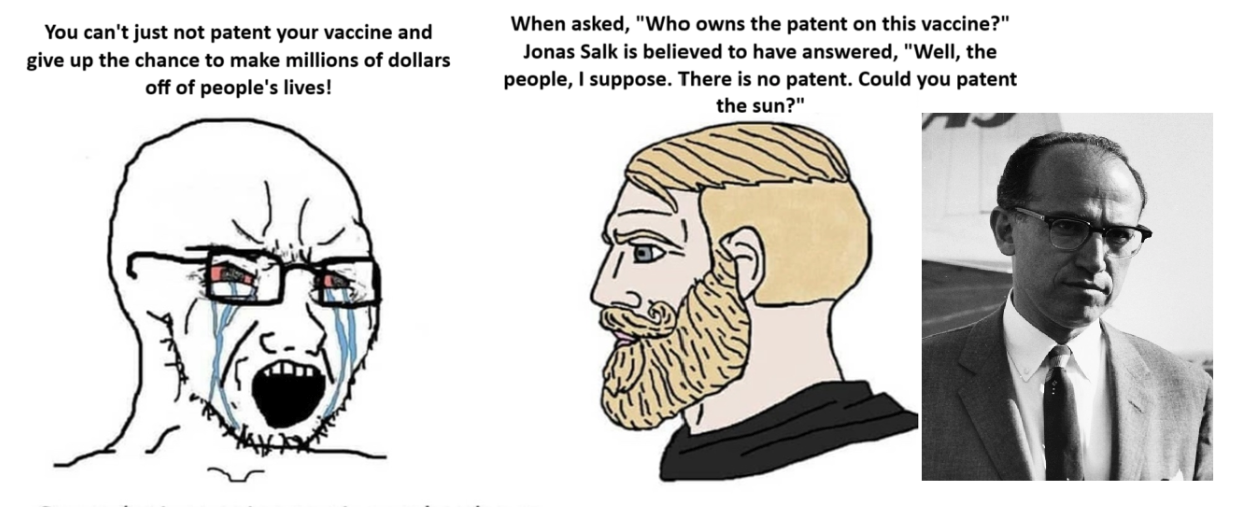
Physician Jonas Salk is credited with developing the first successful polio vaccine, and refusing to patent it or make any profit off of it to ensure that it could be distributed cheaply worldwide (what a hero :0)
Cases worldwide dropped from 350,000 in 1988 to just 33 in 2018– a 99% decrease. However, there was a minute spike in cases in 2019, as the number resurged to 94.
The WHO’s efforts to eradicate polio weren’t all fun and games, though. If anything, getting people vaccinated was an immensely complicated process, involving the following steps:
Planning a vaccination campaign
Polio vaccination campaigns target all the children within a region under the age of five years, and are organized by the WHO in conjunction with the local government and other funding partners.
Other stakeholders include vaccine manufacturers, to whom instructions must be sent ahead of time to ensure an appropriate number of batches of vaccines have been prepared to meet the demands of the campaign, plus extra in the case of an emergency. Factors such as deadlines and timelines, prices, and quantities must be considered.
Having extra wiggle room in the case of an emergency is important. For example, when a sudden outbreak of polio occurred in the Republic of Congo in 2010, the WHO was able to supply the nation with enough effective vaccines within just 10 days.
Transporting the vaccine and maintaining it
Vaccines are transported in large batches of vials, which take up a lot of space. 3 million vials, each containing 20 doses of the vaccine per vial– 60 million doses in total– occupy at least 5 40-foot shipping containers.
The OPV contains a live-attenuated virus (LAV), which is basically a live but weakened virus. To ensure that it remains in its weakened state and cannot replicate further, or that it isn’t killed by high temperatures, the vaccines must be kept at -20 degrees Celsius throughout transit.
Upon reaching the location, the temperature is increased by 2-8 degrees Celsius to turn it into a liquid state so it can be administered. Each vaccine vial contains a vaccine vial monitor (VVM) that changes colour if extreme changes in temperature were experienced by the vaccine vial during transportation. This allows health professionals to discard any contaminated or compromised vials and administer only doses that have remained untouched. Vaccines are transported from their storage area to the location where the vaccination drive takes place through portable cold-box carriers.
The mode of transportation matters as well. Delivery via airplane is the cheapest option and the fastest. However, using typical commercial airlines that transport goods is inconvenient as to keep the vaccines at a cold enough temperature, dry ice is used. However, dry ice releases large amounts of carbon dioxide, meaning it can only be carried in limited amounts aboard commercial flights, cutting down an individual flight’s carrying capacity.
Thus, private planes or charter flights must be used instead.
Finally, to receive the delivery of vaccines, appropriate planning and measures must be implemented to ensure that the vaccines can be cleared through customs rapidly and that there are sufficient officials present to facilitate their unloading.
Informing the locals
Even in this day and age, false rumours about vaccines causing infertility or autism continue to circulate, which may deter people from getting their child vaccinated. Other times, they may not understand that vaccination requires multiple doses. In even more cases, families that live in remote areas can’t be reached, or don’t understand the language in which the drive is advertised.
Thus, communicating with the locals is a crucial step in ensuring the vaccination drive goes as planned.
Organizing volunteers
The volunteers who deliver and administer the vaccine don’t necessarily need to be medical professionals, which makes the process of finding enough staff easier. Thus, the WHO trains organizers, who in turn, find and train volunteers. Still, a large amount of planning is required to transport and communicate with teams of volunteers, and to keep track of which children have already been immunized, and who haven’t yet been vaccinated. The latter is accomplished by marking the vaccinated child’s finger with a marker.
A good example is the immunization campaigns carried out in the slum area of Moradabad in Uttar Pradesh, India. Locals volunteered to deliver the vaccine to children living in the locality, or, “mohalla”. The campaign was funded by IKEA and UNICEF.
Increasing the scope of the campaign
Vaccination is largely a community effort. Though governments do the best they can, cooperation from parents, village leaders, health workers, and even combatants if the campaign is taking place in a zone of conflict, is essential. Thus, the spirit of cooperation can inspire a feeling of nationalism, as all parties are working together under a single cause.
Past Pathogens and Historical Herbs– Healthcare and Medicine in the 19th Century
The Good:
- Economic growth through trade provided the funds to spend on medical research and healthcare.
- Advancements in technology led to the development of tools such as the X-ray in 1895.
- Improved communications allowed medical professionals to communicate with each other across the globe, aiding in the spread of knowledge.
- New ideas such as Darwin’s theory of evolution and destroyed previous myths and falsehoods surrounding disease and healthcare.
- The rise of democracy and socialism saw increased advocacy for human rights, one of which was access to healthcare. The Industrial Revolution contributed to social and economic inequality as well as dangerous work environments, which led to many supporting the Communist movement, especially after Karl Marx’s The Communist Manifesto came out in 1848, to campaign for healthier working conditions.
The Bad:
- Urbanization and the rise of industries saw an increase in diseases associated with poor, unsanitary living and working conditions such as cholera, dermatitis, and various lung diseases. The Industrial Revolution also involved people working directly with uranium and radium to make watches, which led to them developing cancer (see “The Radium Girls”).
- Expanding empires, such as the British Empire in the “Race for Africa”, meant that populations came in contact with newer diseases such as yellow fever in Africa.
- Wars saw newer types of weapons being developed, and by extent, new types of injuries and wounds, both physical and mental, that required the development of new forms of treatment. Could be both physical wounds (gunshots) or psychological ones (PTSD).
The Contributions of Louis Pasteur and Robert Koch
Louis Pasteur, the man behind pasteurized milk, is also credited with being the father of germ theory.
Prior to his discoveries, scientists believed that diseases were caused by bad smells, or miasmas, that would emanate from rotting or fecal matter.
However, with the invention of the microscope, scientists could now observe microbes in real life. Doctors then believed in the theory of spontaneous generation, which was that rotting matter caused the emergence of germs.
Pasteur’s discovery, published officially in 1861, changed everything. He spoke with a brewer and subsequently began to investigate why alcoholic drinks went sour after being stored for long periods of time.
He filtered air through a gun-cotton filter and tested the filter afterwards to find that it was full of microbes. It was through this he understood the process of fermentation, which was caused by bacteria entering into the liquid through exposure to air and breaking down compounds, resulting in the production of ethanol and giving it the “sour” taste.
Through this, he proved that it was the presence of microbes that caused disease, and not the other way around, and that the air itself was not “bad”, but that it carried microbes that caused illness.
He further proved his theory using a swan-necked flask, a piece of laboratory equipment that looked like this:
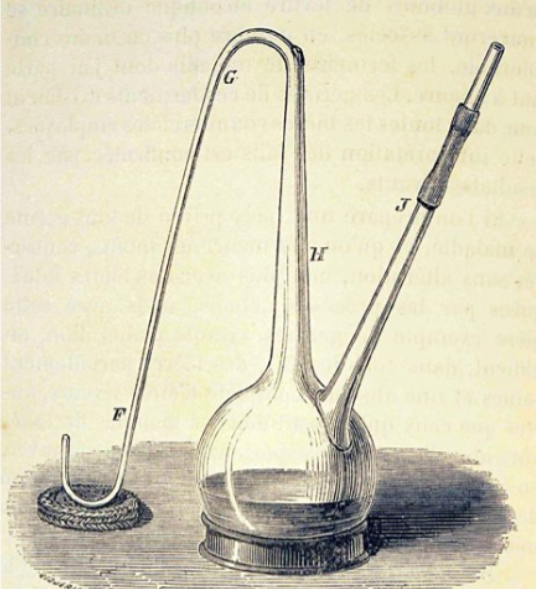
He placed broth within the flask and used heat to mold and twist the glass till it had a curved structure like a swan’s neck.
He then heated the broth within the flask to sterilize it. He predicted that if an outside force was causing decay and disease, it would enter the flask anyways, but if microbes were causing disease, they would be unable to enter the flask through air and would instead get caught in the twists and turns of the swan-necked end.
Furthermore, he discovered that pathogens in milk could be killed by heating it to a high temperature, which resulted in the invention of pasteurization to prevent milk from going bad.
In 1865, Pasteur discovered the bacteria responsible for the silkworm epidemic that was plaguing France, causing loss after loss as silk was the country’s main export. He also discovered three types of bacteria.
In the 1880s, he developed vaccines for humans against rabies and anthrax.
Robert Koch was a German microbiologist who, along with Pasteur, carried the movement for proving germ theory. He won the Nobel Prize for medicine in 1905, and proved that anthrax-causing spores could stay alive in a dormant state for years. He discovered this by observing sheep that developed anthrax even if they were grazed in pastures that had been abandoned for years.
1881– He developed an early form of a petri dish where he used agar jelly to grow bacteria. His assistant, Julius Petri, would go on to refine and officially invent the petri dish. Koch also developed methods of staining bacteria in petri dishes using dye.
1882-3– Koch discovered and isolated the bacterium responsible for tuberculosis in 1882, and cholera in 1883.
Exam Skills & Writing Frameworks
OPVL Analysis
- Origin: Author, time, type of source
- Purpose: Aim, audience, format, message
- Value: Perspective, context, usefulness
- Limitation: Bias, gaps, inaccuracies
History Essay Template (PEST Format)
Title
Clearly state the topic, time period, and location addressed in the question.
Introduction
Introduce the historical context of the question. Clearly define key terms and outline the focus of the essay. End with a clear line explaining what the essay will analyse using the PEST framework.
Political Factors
Analyse the political causes, policies, leadership decisions, laws, alliances, or power structures related to the topic. Support points with specific historical evidence and examples.
Use transitional phrases such as “Politically,” or “From a political perspective,”.
Economic Factors
Examine economic conditions such as trade, industry, wealth distribution, employment, taxation, or economic policies. Link economic motivations to the development of events.
Use transitions such as “Economically,” or “In economic terms,”.
Social Factors
Discuss impacts on different social groups, class divisions, living conditions, migration, education, healthcare, and changes in lifestyles. Include multiple perspectives where possible.
Transition using phrases like “Socially,” or “From a societal viewpoint,”.
Environmental Factors
Analyse environmental impacts such as urban planning, sanitation, pollution, land use, housing conditions, or public health. Connect environmental change to human experiences.
Transition using “Environmentally,” or “From an environmental perspective,”.
Conclusion
Summarise the key political, economic, social, and environmental points discussed. Directly answer the essay question and reflect on the overall significance of the topic.
Key Exam Reminders
- Always follow the PEST structure in essays or any long form answer: Political, Economic, Social and Technological perspectives
- Use transitional words for each paragraph: Moving forwards, In conclusion, Firstly/Secondly stuff like that
- Support claims with evidence, iB loves this
- Always write long forrm answers with a timeline in mind- all the events need to be in correct order
- Maintain focus on the question and what it's actually asking