Biology
Unit 1: Human Impact on the Environment
This unit explores how human activities alter ecosystems, affect biodiversity, and contribute to environmental change on both local and global scales.
Core Topics
HIPPO (Habitat change or destruction, Invasive alien species, Pollution), climate systems and processes including glaciation and interglacial periods, greenhouse gases and their sources, the greenhouse effect, carbon footprint, ecological consequences of global warming, FACE trials, the El Niño effect, red tides, eutrophication and algal blooms, acid rain, pollution management, salmon farming and the ISA virus, and conservation strategies.
H.I.P.P.O.
“I think Moto Moto likes you.”
The acronym H.I.P.P.O. does not refer to the animal, but instead represents the five main human-driven causes of biodiversity loss and global species extinction:
- Habitat loss
- Invasive species
- Pollution
- Population growth (human)
- Overharvesting
Habitat Loss
The loss of both terrestrial and aquatic habitats greatly affects biodiversity. According to the IUCN, approximately 85% of species classified as Threatened or Endangered are primarily affected by habitat loss.
Terrestrial habitat loss occurs due to urban development, resource extraction, and agriculture. Converting undeveloped land into urban areas deprives organisms of their natural habitats, while activities such as mining, logging, and oil drilling damage surrounding ecosystems.
Around 15 billion trees are cut down each year. Deforestation also reduces the ability of forests to act as carbon sinks, limiting carbon dioxide uptake through photosynthesis.
Agricultural expansion is a major driver of habitat loss, particularly when unsustainable practices such as slash-and-burn farming are used. These methods reduce soil fertility, forcing further deforestation. During the 1990s, nearly 70% of deforested land was converted into agricultural use.
Aquatic habitats include oceans, rivers, lakes, wetlands, and bogs. Deforestation increases soil erosion, leading to sediment runoff that blocks sunlight in shallow waters and disrupts organisms such as coral reefs.
Wetlands and estuaries act as breeding grounds for many fish species, but dredging and land reclamation disrupt life cycles. Peat bogs are also important carbon sinks, as acidic conditions prevent organic matter from decomposing and releasing carbon into the atmosphere.
Even small-scale actions such as raking leaves can disrupt forest floor ecosystems by removing nutrients and shelter needed by insects and small animals.
Invasive Species
Invasive species are non-native organisms that negatively impact ecosystems. Examples include kudzu vines and cane toads. These species often outcompete native organisms for resources such as food, space, and sunlight.
Invasive species are typically introduced intentionally or accidentally through human activities such as trade, travel, agriculture, and the exotic pet trade.
To be classified as invasive, a species must:
- Proliferate and reproduce rapidly
- Adapt effectively to the local environment
- Outcompete native species
- Cause harm to local ecosystems
Invasive organisms are not limited to animals; plants, fungi, and microbes can also become invasive.
Consequences of invasive species include environmental damage, threats to human health, and economic losses. Invasive species can cause up to $1.4 trillion in global economic damage by affecting industries such as fisheries and forestry.
An example is the black wattle tree, which rapidly depletes water sources despite being introduced for timber production.
Species may be introduced intentionally, such as the cane toad in Australia for pest control, or accidentally, such as zebra mussels transported in ship ballast water.
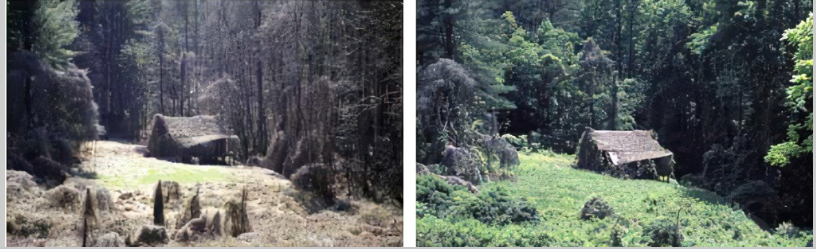
The rapid growth of kudzu in less than one year.
Kudzu vines are an invasive species commonly found in North America, despite originating from Asia. They grow rapidly over trees and other plants, smothering them and blocking access to sunlight. Kudzu also outcompete native plants for root space, preventing new saplings and shoots from establishing.
Kudzu was originally introduced as an ornamental plant and later extensively planted to reduce soil erosion. This intervention proved to be highly ineffective and environmentally damaging.
Grey squirrels are another example of an invasive species. Native to North America, they were introduced to the United Kingdom from the 1890s onwards. Compared to native red squirrels, grey squirrels are larger, more robust, and better adapted to competing for food and habitat.
Grey squirrels also carry the squirrelpox virus, to which red squirrels have little resistance. This disease has significantly reduced red squirrel populations. Additionally, grey squirrels can digest tannin-rich foods such as acorns more efficiently, giving them a further competitive advantage.
Crayfish are freshwater crustaceans that exist in both native and invasive varieties. In some regions, native white-clawed crayfish are threatened by invasive red-clawed crayfish. The invasive species outcompete natives for food and shelter and transmit crayfish plague, which is often fatal to native populations.
Controlling the Spread of Invasive Species
- Clean, Dry, Disinfect: Thoroughly cleaning boats and equipment before moving between water bodies reduces the spread of invasive organisms such as zebra mussels.
- Do not release exotic pets: Releasing non-native pets into the wild has led to invasive populations, such as Burmese pythons in Florida.
- Plant native species: Encouraging native vegetation supports local ecosystems and reduces invasive spread.
- Biocontrol agents: Introducing natural predators or pathogens to control invasive populations.
Pollution
Pollution refers to the introduction of harmful substances into the environment. Plastic pollution is one of the largest contributors to land and soil pollution. Plastics are artificial polymers primarily derived from petroleum.
Plastics: Advantages and Disadvantages
Pros:
- Cost-effective to produce
- Readily available
- More durable than alternatives such as paper or cardboard
- Recyclable in some forms (thermoplastics can be melted and reused)
Cons:
- Not biodegradable
- Cannot be decomposed by microorganisms
- Harms living organisms
- Releases toxins and carcinogens into ecosystems
Plastic pollution can be reduced using the 4Rs: Refuse, Reduce, Reuse, and Recycle.
Impacts of Plastic Pollution
Social:
Encouraging individuals to switch from plastic to sustainable alternatives is challenging due to cost, convenience, and habit.
Economic:
Plastic products are often cheaper than alternatives such as glass, making them more accessible to low-income households. Recycling programs can provide financial incentives.
Environmental:
Plastics persist in the environment and can break down into microplastics. Aquatic organisms may ingest plastic debris, mistaking it for food, leading to injury, suffocation, or death.
Ethical:
The use of plastic raises ethical concerns due to long-term environmental damage. Some alternatives, such as paper straws or plates, may also have significant environmental costs through production and waste.
Bioaccumulation and Biomagnification
Biomagnification is the process by which toxins become more concentrated at higher trophic levels within a food chain.
This occurs with substances such as pesticides and fertilizers. DDT (dichlorodiphenyltrichloroethane), once widely used as an insecticide, accumulated in bald eagles, causing eggshell thinning and reproductive failure.
Mercury can also biomagnify through aquatic food chains. Humans consuming contaminated fish may develop Minamata disease, which can cause neurological damage and delayed brain development in children.
Only approximately 90% of energy is transferred between trophic levels, with around 10% lost as heat. As a result, organisms must consume large quantities of food, increasing toxin intake at higher trophic levels.
Bioaccumulation refers to the buildup of toxic substances within a single organism over time.
Bioconcentration describes the accumulation of toxins within all aquatic organisms in a specific environment.
Populations
A population consists of all organisms of a single species living in a specific area at a particular point in time. This differs from a community, which includes all populations of different species in an area, and an ecosystem, which includes both biotic and abiotic components as well as their interactions.
Changes in population size can be explained by four main factors:
- Competition: Organisms competing for food, territory, or mates may result in weaker individuals failing to reproduce or being eliminated.
- Disease: Disease outbreaks in non-immune populations can rapidly reduce population size until immunity develops.
- Predation: Increased predator numbers result in higher prey consumption and a reduction in prey population.
- Food scarcity: Limited food availability leads to starvation, with weaker organisms dying first.
Predator and prey populations are inversely proportional. An increase in prey population is followed by a delayed increase in predator population, as predators require time to reproduce in response to food availability.
Similarly, when prey populations decline, predator populations initially remain high before gradually decreasing due to food shortages.
Population Growth Curves
Population growth can be modelled using a sigmoid (S-shaped) curve, commonly observed in controlled bacterial growth.
The lag phase represents the period during which organisms adapt to their environment before reproduction begins.
The exponential growth phase follows, where the population increases rapidly as organisms reproduce at maximum rate.
As resources become limited, the population enters the stationary phase, where growth rate slows and population size stabilizes.
If the population exceeds the environment’s carrying capacity, resources become scarce and the population declines during the death phase.
The Greenhouse Effect
The greenhouse effect is the warming of the Earth’s surface due to greenhouse gases trapping thermal energy in the atmosphere. Earth’s atmosphere is composed of approximately 78% nitrogen, 21% oxygen, and around 1% other gases, including greenhouse gases.
Energy from the Sun reaches Earth as electromagnetic radiation. After absorbing this energy, the Earth’s surface radiates heat back toward space. Without an atmosphere, much of this thermal energy would be lost.
Greenhouse gases such as carbon dioxide, methane, nitrous oxides, and chlorofluorocarbons trap heat reflected from Earth’s surface. These gases re-radiate thermal energy back toward Earth, increasing surface and atmospheric temperatures.
This natural effect is essential for life. Without greenhouse gases, Earth’s average surface temperature would be approximately −18°C, making the planet uninhabitable.
Human activities, particularly the burning of fossil fuels, have increased the concentration of greenhouse gases in the atmosphere. This intensifies the greenhouse effect and causes excess heat to be trapped.
Even small increases in global temperature have severe consequences. Recent records show global temperatures exceeding previous averages, resulting in widespread environmental impacts.
- Accelerated melting of ice caps and glaciers
- Rising sea levels
- Increased risk of extinction for temperature-sensitive species
- Coral bleaching due to warmer oceans
- More frequent and severe natural disasters
- Spread of disease-carrying insects into new regions
Carbon Footprint and Carbon Cycling
A carbon footprint is the total amount of carbon emissions released into the atmosphere by an individual, activity, or organization. Carbon emissions contribute directly to the greenhouse effect.
Carbon-neutral activities neither increase nor decrease atmospheric carbon levels, such as walking or cycling instead of driving.
Carbon sinks are systems that absorb and store carbon from the atmosphere. Examples include forests, oceans, and afforestation efforts.
Global Warming
Global warming is the long-term increase in Earth’s average surface temperature since the pre-industrial period due to human activities, particularly fossil fuel combustion.
While climate change can occur naturally, global warming is accelerating these changes at an unprecedented rate, leading to widespread environmental, ecological, and societal impacts.
Glacial and Interglacial Periods
Glacial and interglacial periods are long-term climatic phases lasting thousands of years. Glacial periods are characterized by colder global temperatures and the advancement of glaciers, while interglacial periods are warmer intervals during which glaciers retreat.
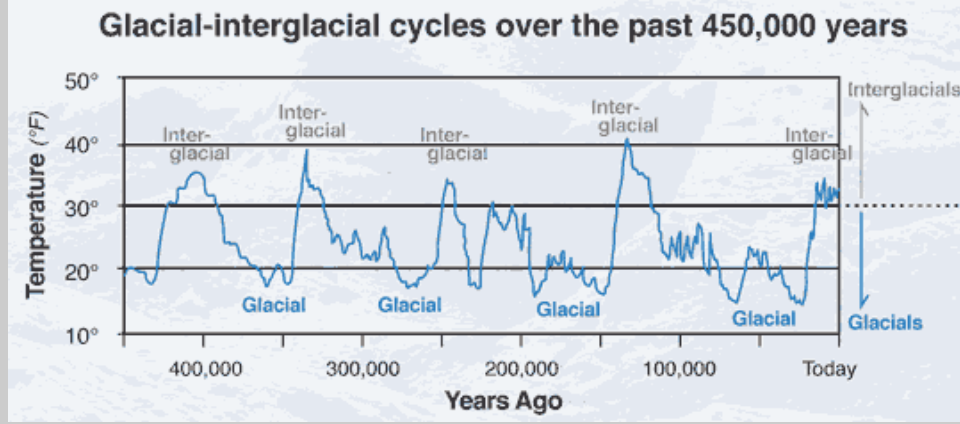
These periods alternate over geological time and are driven by several interacting factors:
- Continental drift: The movement of tectonic plates alters the position of continents relative to the equator and poles, influencing regional and global climate patterns.
- Volcanic activity: Volcanic eruptions release heat, ash, and aerosols into the atmosphere, which can temporarily alter global temperatures.
- Astronomical factors: Variations in solar radiation, Earth’s orbital shape, and axial tilt affect how much thermal energy reaches Earth (Milankovitch cycles).
- Atmospheric factors: During glacial periods, higher dust levels in the atmosphere reflected more heat back into space, while greenhouse gas concentrations such as carbon dioxide and methane were lower than during interglacial periods.
FACE Trials and Carbon Dioxide Concentration
FACE Trials (Free-Air Carbon Dioxide Enrichment)
FACE stands for Free-Air Carbon Dioxide Enrichment experiments. These experiments are used to predict future rates of photosynthesis and plant growth in response to increasing atmospheric carbon dioxide concentrations.
FACE trials are particularly important due to rising greenhouse gas emissions caused by fossil fuel combustion and deforestation.
Procedure
FACE trials are conducted in open-field environments. Carbon dioxide is released into the air using large circular arrays of pipes surrounding vegetation. Sensors, valves, and wind vanes monitor CO₂ concentration and wind direction to ensure even gas distribution across the study area.
Control plots exposed to normal atmospheric CO₂ concentrations are used for comparison.
Advantages of FACE Trials
- Provide realistic insight into ecosystem responses to elevated CO₂
- Account for uncontrolled variables such as light, water, and species interactions
- Allow study of large plants and trees in natural conditions
Limitations of FACE Trials
- Not suitable for short-term studies
- Extremely expensive to operate and maintain
- Environmental variables cannot be controlled
Enclosed CO₂ Experiments
Enclosed CO₂ experiments are performed in controlled environments such as greenhouses. CO₂ concentration, temperature, and light intensity can be precisely regulated.
Pros:
- Useful for short-term studies
- Allows isolation of individual variables
Cons:
- Lack ecological realism
- Do not account for competition, soil variation, or mature trees acting as carbon sinks
Variables in FACE Experiments
- Independent Variable (IV): Atmospheric CO₂ concentration
- Dependent Variable (DV): Photosynthesis rate, plant height, biomass
- Control Variables: Generally not controlled, as FACE trials aim to observe CO₂ effects under natural conditions
The El Niño Effect
El Niño is a global climate phenomenon occurring irregularly every 2–7 years in the Pacific Ocean and lasting approximately 9–12 months. It was named by South American fishermen after its frequent appearance around Christmastime.
An El Niño event is identified when sea surface temperatures in the equatorial Pacific rise by at least 0.5°C for three consecutive months, accompanied by altered atmospheric pressure and rainfall patterns.
Normal Pacific Conditions
Under normal conditions, trade winds push warm surface water westward toward Asia and Oceania. As this warm water moves west, cold, nutrient-rich water rises near South America to replace it — a process known as upwelling.
Upwelling supports phytoplankton growth, which forms the base of productive marine food webs and sustains fisheries.
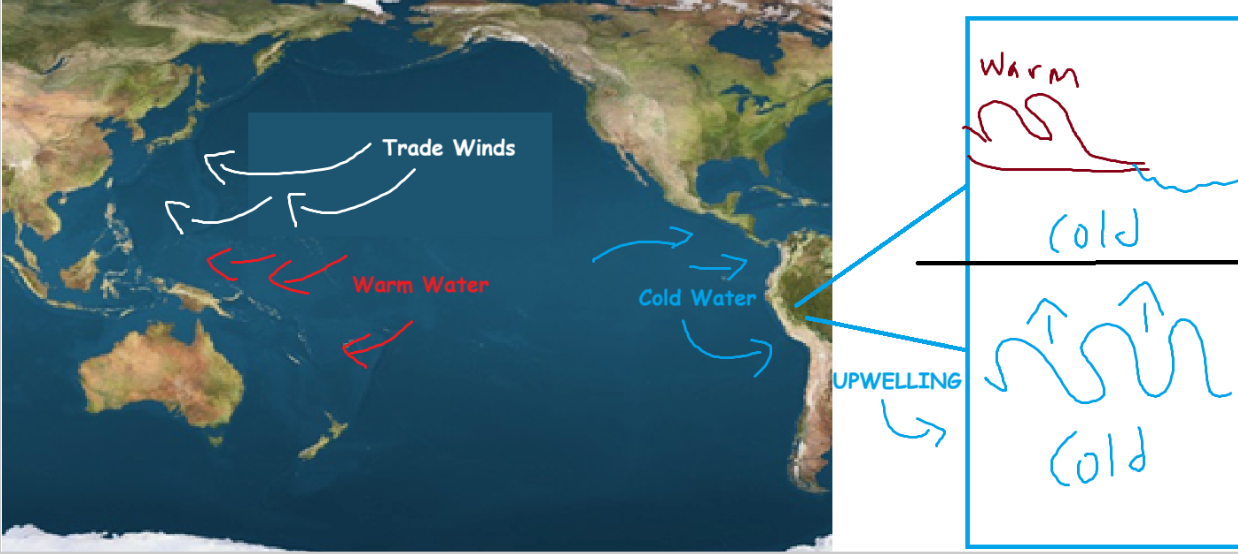
El Niño Conditions
During an El Niño event, trade winds weaken. Warm surface water is no longer pushed westward and instead accumulates near Central and South America. Upwelling is reduced, preventing nutrient-rich water from reaching the surface.
This results in reduced phytoplankton populations, which causes fish numbers to decline and disrupts marine food chains.
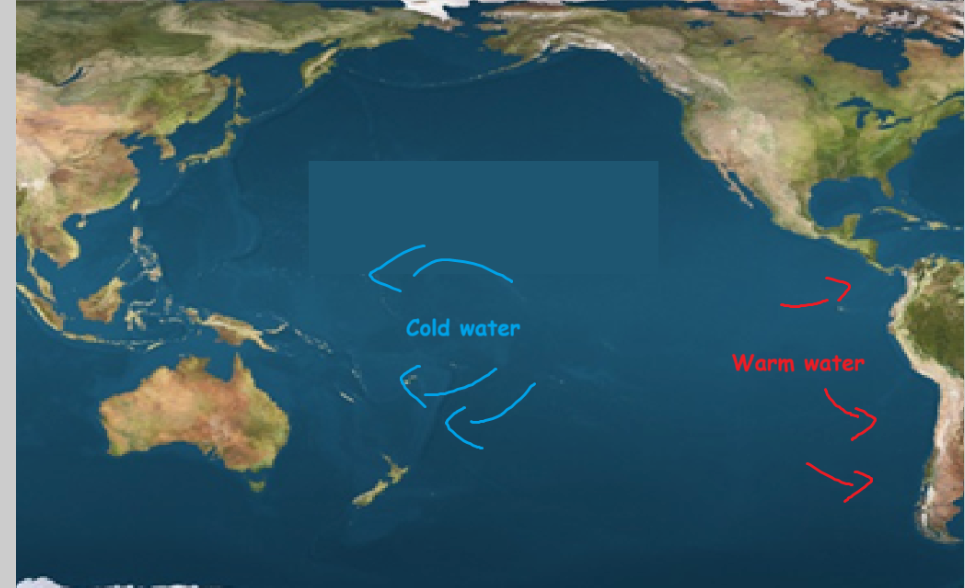
Global Impacts of El Niño
El Niño dramatically alters weather patterns. Regions such as Indonesia and Australia experience reduced rainfall and droughts, while parts of South America face heavy rainfall and flooding.
Warmer Pacific waters increase hurricane formation and severely impact fishing industries due to the collapse of marine food webs.
El Niño events also cause marine heatwaves, prolonged periods of abnormally high ocean temperatures. These events are intensified by climate change and have led to mass die-offs in species such as snow crabs.
Marine heatwaves can also trigger harmful algal blooms, which will be explored in the following section.
Invasive Species
Kudzu vines are an invasive species commonly found in North America despite being from Asia. They grow rapidly over other trees and plants, smothering them and blocking sunlight. Furthermore, they outcompete native plants for root space, preventing new saplings and shoots from taking root and growing. Kudzu were initially introduced as an ornamental plant and later overplanted to combat soil erosion — a very bad idea.
Grey squirrels are another invasive species. Native to North America, they were introduced to the U.K. from the 1890s onwards. Compared to the native red squirrel, grey squirrels are larger and more robust. They outcompete native species for resources and are carriers of the squirrelpox virus, further reducing red squirrel populations. They can also digest tannin-rich foods like acorns more efficiently.
Crayfish are crustaceans that, in the U.S., occur as native white-clawed species and invasive red-clawed species. Red-clawed crayfish outcompete natives for food and shelter and also carry crayfish plague.
Controlling the Spread of Invasive Species
- Clean, Dry, Disinfect: Cleaning boats prevents the spread of organisms such as zebra mussels.
- Do not release exotic pets: Burmese pythons spread in Florida via the pet trade.
- Planting native species.
- Introducing biological control agents.
Pollution
Plastic pollution is one of the greatest contributors to land and soil pollution. Plastic is an artificial polymer made primarily from petroleum.
Pros
- Cost-effective to produce
- Readily available
- More durable than paper or cardboard
- Thermoplastics can be recycled
Cons
- Not biodegradable
- Cannot be decomposed by microbes
- Harms living organisms
- Releases toxins and carcinogens
Plastic pollution can be reduced using the 4Rs: Refuse, Reduce, Reuse, and Recycle.
Impacts of Plastic Pollution
Social: Convincing people to switch to sustainable alternatives is difficult.
Economic: Plastic is cheaper for low-income households and easy to produce.
Environmental: Plastic contributes to bioaccumulation and is often mistaken for food by animals.
Ethical: Plastic use harms ecosystems; paper alternatives also have environmental costs.
Biomagnification is the increase in toxin concentration across trophic levels. Chemicals such as DDT caused eggshell thinning in bald eagles.
Mercury accumulates in fish and can cause Minamata disease in humans, leading to delayed brain development in children.
Only about 10% of energy is transferred between trophic levels; organisms consume large amounts of food, increasing toxin intake.
Bioaccumulation is toxin buildup within a single organism, while bioconcentration refers to toxin buildup in aquatic organisms in a specific area.
Glacial and Interglacial Periods
Glacial and interglacial periods are long intervals marked by colder temperatures with glacier advancement, and warmer climates respectively.
These cycles are influenced by several factors:
- Continental drift: Movement of tectonic plates changes climate zones.
- Volcanic eruptions: Release heat and debris into the atmosphere.
- Astronomical factors: Changes in solar radiation, Earth’s orbit, and axial tilt.
- Atmospheric factors: Dust reflects heat; greenhouse gas levels are lower during glacial periods.
El Niño
Social Impact
- Flood-related displacement and deaths
- Increase in waterborne diseases
- Famine and malnutrition due to crop failure
- Loss of jobs and industries
Economic Impact
- Crop failure in Southeast Asia
- Increased food prices
- Reduced hydropower in Indonesia affecting mining
- Improved crop growth in California
- Fishing industry losses in South America
Environmental Impact
- Decline in fish and phytoplankton populations
- Marine heatwaves affecting species like snow crab
- Flooding and harmful algal blooms
- Droughts and forest fires in Southeast Asia
- Typhoons and hurricanes
Causes
- Weakening of trade winds
- Global warming intensifying effects
Red Tides and Eutrophication
A red tide is a type of harmful algal bloom caused by dinoflagellates. These blooms discolor water and release toxins harmful to marine life and humans.
Toxins bioaccumulate in predators and shellfish, leading to mass deaths and human illness. Airborne toxins can also cause beach closures and economic losses.
Salmon Farming and the ISA Virus
Fish farming reduces pressure on wild fish stocks. Freshwater fish like carp are grown in ponds, while saltwater fish such as salmon are raised in sea cages.
Advantages of Fish Farming
- Selective breeding for rapid growth
- Protection from predators
- Controlled feeding and water quality
- Reduced toxin exposure
A major threat to salmon farming is Infectious Salmon Anemia (ISA). While harmless to humans, it reduces fish health and yield.
Prevention of ISA
- Vaccination
- Disinfection of equipment
- Removal of infected fish
Metamorphosis
Butterfly life cycle: Egg >> Larva >> Pupa >> Adult
Phenology
Phenology is the study of periodic plant and animal life-cycle events and how these are influenced by seasonal and interannual variations in climate, as well as habitat factors.
In simple terms, it examines life cycles of organisms and how abiotic factors affect them, such as the timing of hummingbird visits to flowers.
- Determines abundance and distribution of organisms
- Influences food webs, water cycles, and carbon cycles
- Often described as “nature’s calendar”
- Bird eggs hatch when insects are abundant
- Insects emerge during leaf growth
- Farmers adjust fertilizer and pesticide schedules
- Early puberty in human females may indicate phenological change
- GM foods developed to meet population demands (health impacts debated)
Reproduction
Reproduction is the production of new individuals of the same species. It is an essential life process for survival and maintenance of a population.
Pollination
Pollination is the transfer of mature pollen grains from the anther to the stigma of a flower. There are two main types: self-pollination and cross-pollination.
Self-Pollination
Occurs when pollen from a plant’s own anther reaches its stigma (including between flowers on the same plant). This results in reduced genetic diversity.
Cross-Pollination
Occurs when pollen is transferred between flowers of different plants. This increases genetic diversity.
Pollinating Agents
- Wind (e.g. dandelions)
- Insects (e.g. bees, bee orchid)
- Animals (e.g. hummingbirds, bats)
- Artificial pollination by humans
Double Fertilization in Plants
After pollination, a pollen grain germinates on the stigma. The tube cell forms a pollen tube that grows down the style into the ovule via chemotropism.
The generative cell divides into two male germ cells:
- One fertilizes the egg to form a zygote
- The other fuses with two polar nuclei to form the endosperm
Since two fertilization events occur, this is called double fertilization. Ovules develop into seeds, and the ovary becomes the fruit.
Anatomy of a Flower
Flowers are reproductive organs of plants and may be male, female, or bisexual.
Male Organ: Stamen
- Anther: Produces and stores pollen
- Filament: Supports the anther
Female Organ: Pistil
- Stigma: Receives pollen
- Style: Connects stigma to ovary
- Ovary: Contains ovules; develops into fruit
- Ovules: Contain egg cell and polar nuclei
Other flower parts include sepals (protection) and petals (attract pollinators).
Nodes are points where leaves arise; internodes are spaces between nodes. Buds contain the full genetic information of the plant.
Leaves attach via a petiole and consist of the lamina, midrib, veins, and veinlets.
Plant Tissue Culture (PTC)
PTC is the in-vitro culturing of plant cells in sterile nutrient media to produce clones.
Applications
- Agriculture: high yield and resistant crops
- Research
- Conservation of endangered plants
Process
- Explant taken from parent plant
- Placed in sterile nutrient medium
- Forms a callus
- Cells differentiated into plants or tissues
Advantages
- Rapid propagation
- Weather-independent
- Sterile and healthy plants
- Conserves land and water
- Preserves endangered species
- Creates skilled jobs
Disadvantages
- Expensive
- Acclimatization losses
- Lack of genetic diversity
- Not suitable for all plants
Male Reproductive System
The primary organs are the testes, located in the scrotum outside the body to maintain a lower temperature optimal for sperm production.
Each testis contains around 250 lobules with seminiferous tubules where sperm are produced.
- Spermatogonia: Male germ cells
- Sertoli cells: Provide nutrients
- Leydig cells: Secrete testosterone
Sperm Pathway
Rete testis → efferent ducts → epididymis → vas deferens → urethra
Accessory Organs
- Seminal vesicles: Produce seminal fluid
- Prostate: Adds fluid and blocks urine during ejaculation
- Penis: Copulatory organ and urinary passage
Female Reproductive System
The female reproductive system consists of the following organs:
Ovaries
The primary organs of the female reproductive system. Ovaries are composed of follicular cells, within which meiotic division occurs. This results in the maturation of a single ovum each month, which is released into the fallopian tubes for around 48 hours for possible fertilization.
Ovaries also secrete hormones such as estrogen and progesterone, which regulate the menstrual cycle.
Structurally, ovaries consist of an inner medulla (containing blood vessels and ligaments) and an outer cortex that houses ovarian follicles.
Within the ovaries, the ovarian cycle takes place.
The Ovarian Cycle
Each ovarian follicle contains a single immature egg (primary oocyte) surrounded by granulosa cells. These follicles have been suspended in early development since birth and are called primordial follicles.
Females are born with all the eggs they will ever have. Over time, follicles mature, but only one fully mature follicle ovulates per cycle. The rest undergo atresia.
The mature follicle responds to luteinizing hormone (LH) released by the pituitary gland. Rising estrogen levels create a positive feedback loop, triggering a surge of LH. Around day 14, the follicle ruptures and releases a mature ovum into the fallopian tube.
The ruptured follicle forms the corpus luteum, which secretes progesterone to thicken the endometrium. If fertilization does not occur, it degenerates into the corpus albicans, progesterone levels fall, and menstruation begins.
…Okay, back to the Female Reproductive System (holy yap)
Oviducts / Fallopian Tubes
These are 10–12 cm long tubes connecting the ovaries to the uterus. The ovum travels through them after ovulation.
The funnel-shaped infundibulum contains finger-like projections called fimbriae that sweep the ovum into the tube. This leads to the ampulla, then the isthmus, which connects to the uterus.
Uterus
A pear-shaped muscular organ with three layers:
- Perimetrium: outer layer
- Myometrium: muscular layer responsible for contractions during labour
- Endometrium: inner lining where implantation occurs
Vagina
The lower part of the birth canal, connected to the uterus via the cervix. It stretches during childbirth.
External Genitalia
- Labia majora & minora: folds protecting the vaginal opening
- Clitoris: sensitive structure analogous to the glans penis
- Mons pubis: fatty tissue over the pubic bone
- Hymen: thin membrane near the vaginal opening
The Mammary Glands
Cover your eyes, children! It’s a pair of boobies! (haha my humor is so mature)
Mammary glands are located in the breasts and are responsible for milk production through lactation, which nourishes newborns.
They exist as paired tissues surrounded by variable amounts of fat. Internally, they are composed of:
- Mammary alveoli: produce milk
- Mammary lobes: clusters of alveoli
- Mammary tubules: drain alveoli
- Mammary ducts: formed by merging tubules
- Ampullae: enlarged ducts that store milk
- Lactiferous ducts: deliver milk to the nipple
External structures include the nipples and areola.
Gametogenesis
Gametogenesis is the process by which diploid precursor germ cells in the male and female gonads produce haploid gametes (sex cells) through cell division and differentiation.
The formation of male gametes (sperm) is called spermatogenesis, while the formation of female gametes (ova) is called oogenesis.
Spermatogenesis
Spermatogenesis begins at puberty and occurs in the testes, specifically within the seminiferous tubules.
These tubules contain spermatogonia, which are diploid germ cells that will ultimately develop into sperm through two main stages: spermatidogenesis and spermiogenesis.
The process is hormonally regulated. Gonadotropin-releasing hormone (GnRH) released by the hypothalamus stimulates the anterior pituitary gland to release luteinizing hormone (LH) and follicle-stimulating hormone (FSH).
LH acts on the Leydig cells in the testes, stimulating them to secrete androgens such as testosterone. These hormones initiate and maintain spermatidogenesis.
- Multiplication phase: Spermatogonia undergo mitosis to increase their numbers. These cells are diploid (2n).
- Growth phase: The cells increase in size in preparation for meiosis.
- Maturation phase: Meiosis I and II produce four genetically distinct haploid cells called spermatids.
During spermiogenesis, spermatids differentiate into mature, motile sperm cells. Excess cytoplasm is lost, and only the nucleus, acrosome, mitochondria, and flagellum remain.
Oogenesis
Oogenesis is a more complex and discontinuous process that begins before birth and involves several stages of arrest.
In the developing female fetus, primordial oogonia undergo mitosis to increase in number. They then enter meiosis I but become arrested at prophase I (diplotene stage).
These oogonia are arranged in germ cell nests. Within each nest, one cell is destined to become a primary oocyte, while the remaining cells act as nurse cells, donating cytoplasm and organelles before undergoing apoptosis.
Granulosa cells invade the nests and separate the cells, forming primordial follicles. By birth, a female has approximately 1–2 million follicles per ovary.
At puberty, GnRH stimulates the release of FSH and LH. FSH promotes follicle maturation, while LH stimulates ovulation. Estrogen secretion by the follicle creates a positive feedback loop, leading to an LH surge.
The follicle matures sequentially into a primary, secondary, and then tertiary (antral) follicle. The oocyte becomes surrounded by the zona pellucida, while granulosa cells form structures such as the corona radiata and cumulus oophorus.
A surge in LH causes the primary oocyte to complete meiosis I, producing a secondary oocyte and a polar body. The follicle is now a mature Graafian follicle.
The secondary oocyte enters meiosis II but is arrested at metaphase II. Ovulation releases the oocyte into the fallopian tube, while the remaining follicular tissue forms the corpus luteum.
Fertilization triggers completion of meiosis II, producing a mature ovum and a second polar body. Fusion of the sperm and egg nuclei restores diploid chromosome number, forming a zygote.
Fertilization, Pregnancy, and Childbirth
Fertilization determines the genetic sex of the offspring. The egg always carries an X chromosome, while sperm carry either X or Y.
Pregnancy (Gestation)
Pregnancy lasts approximately nine months and is divided into three trimesters.
- Month 1: Heart begins to form and beat
- Month 2: Limbs and digits develop
- Month 3: Major organ systems form
- Month 5: Lanugo hair develops; movement felt
- Month 7: Eyelids and eyelashes form
- Month 9: Fetus is fully developed
Cleavage and Blastocyst Formation
After fertilization, the zygote undergoes rapid mitotic divisions called cleavage, forming blastomeres, a morula, and eventually a blastocyst.
The blastocyst implants into the endometrium about one week after ovulation. The trophoblast secretes hormones that maintain the corpus luteum and prevent menstruation.
The Placenta
The placenta forms from trophoblastic tissue and facilitates nutrient exchange, respiration, waste removal, hormone secretion, and immune protection between mother and fetus.
It also secretes hormones such as hCG, hPL, estrogen, and progesterone to sustain pregnancy.
Later Stages and Hormonal Regulation
Hormones including estrogen, progesterone, cortisol, thyroxine, and relaxin regulate fetal growth, immune tolerance, and preparation for childbirth.
Delivery (Parturition)
A decrease in progesterone and increase in estrogen initiate uterine contractions. Oxytocin drives labour through a positive feedback loop.
Cervical dilation reaches approximately 10 cm before expulsion of the fetus, followed by delivery of the placenta.
Lactation
Lactation begins near the end of pregnancy and is regulated primarily by prolactin. Early breast milk (colostrum) is rich in antibodies that protect the newborn.
The Menstrual Cycle
The menstrual cycle refers to the reproductive cycle that occurs in human females, repeating approximately every 28 days. The cycle consists of four main phases.
i. Menstruation (Bleeding Phase)
Duration: 3–7 days
Menstruation is the periodic discharge of blood, tissue, fluid, and mucus as the endometrium breaks down and is expelled through the vagina. This occurs when a mature ovum has been released but fertilization does not take place.
It is triggered by a drop in progesterone and estrogen levels. A similar hormonal drop during pregnancy would result in miscarriage due to collapse of the endometrial lining.
ii. Follicular Phase
Duration: Days 1–14
Rising levels of FSH and LH stimulate follicle development in the ovaries. Proliferation of follicular cells occurs via continuous cell division, while estrogen released by developing follicles promotes regeneration of the endometrium.
iii. Ovulation
Duration: 1 day (≈ Day 14)
A surge in LH causes the mature follicle to rupture, releasing the ovum from the ovary.
iv. Luteal (Secretory) Phase
The ruptured follicle becomes the corpus luteum, which secretes progesterone to maintain the endometrium. If fertilization does not occur, it degrades, hormone levels fall, and menstruation begins again.
Cell Division
Cell division is the process by which a parent cell divides into daughter cells. It occurs via mitosis (growth and repair) and meiosis (reproduction).
The Cell Cycle
The cell cycle lasts approximately 24 hours, with most of the time spent in interphase (G₀, G₁, S, and G₂), preparing the cell for division.
Mitosis
Mitosis produces two genetically identical diploid daughter cells and is essential for growth and tissue repair.
1. Prophase
Chromatin condenses into visible chromosomes. Centrosomes migrate to opposite poles and spindle fibres begin to form.
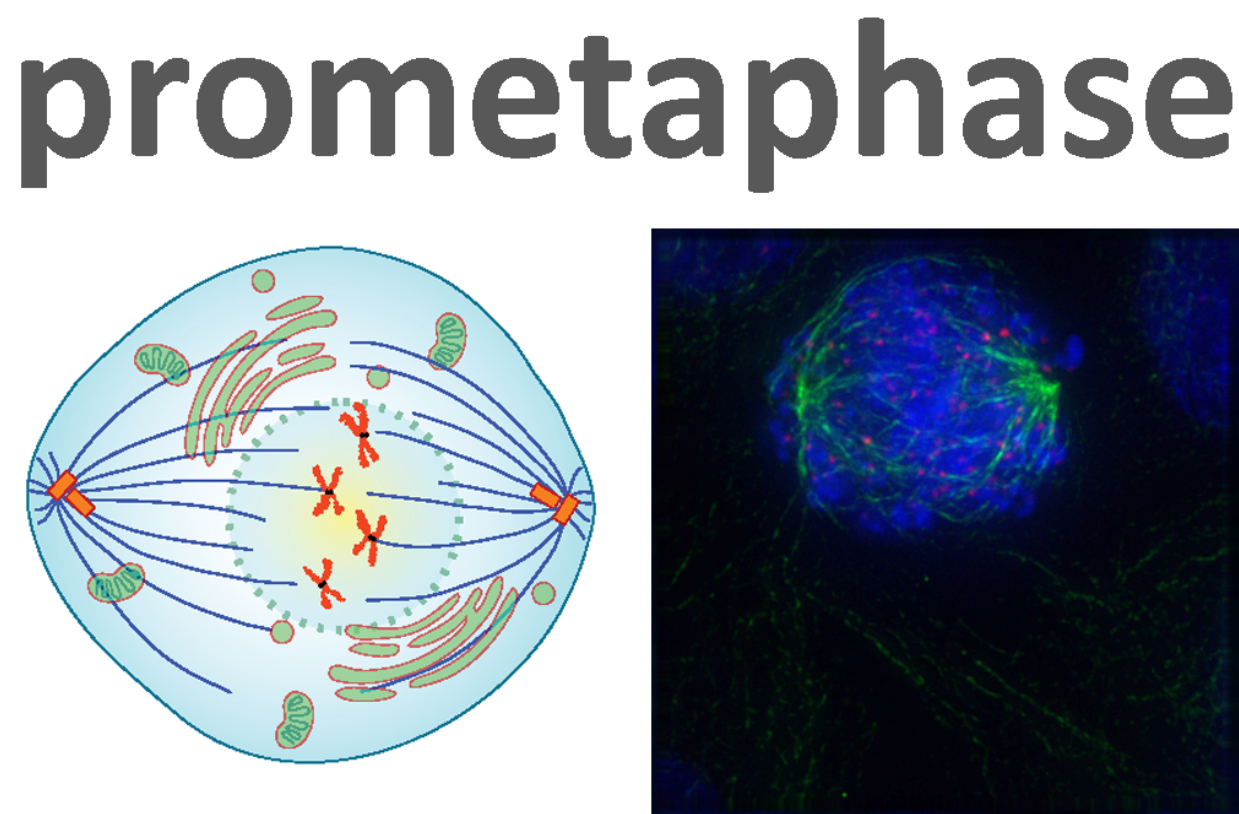
2. Prometaphase
The nuclear membrane and nucleolus disappear. Kinetochores form at centromeres, allowing spindle fibres to attach and begin aligning chromosomes toward the metaphase plate.
3. Metaphase
Chromosomes align precisely along the metaphase plate. The spindle checkpoint ensures all kinetochores are properly attached before progression.
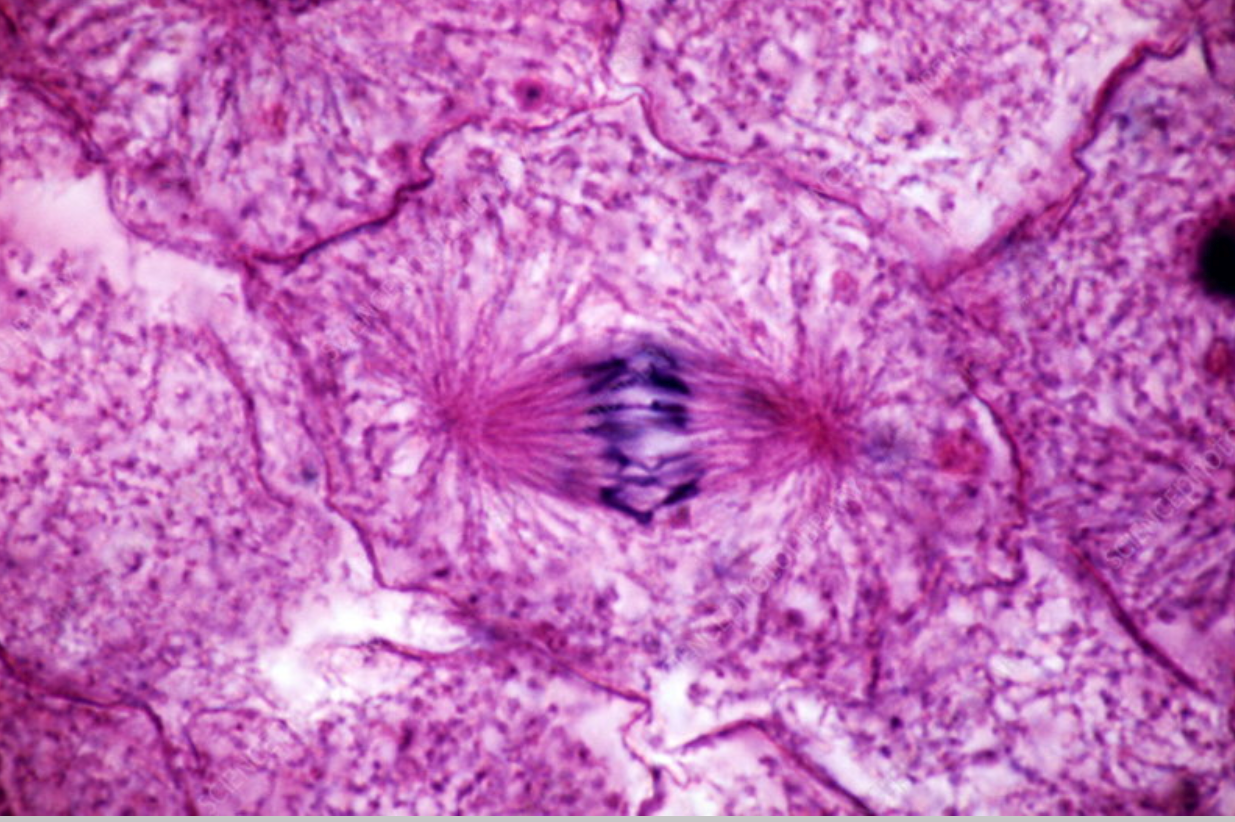
4. Anaphase
Sister chromatids separate at the centromeres and are pulled toward opposite poles of the cell by shortening spindle fibres.
5. Telophase
Chromosomes decondense back into chromatin. Nuclear membranes reform, and the spindle apparatus disassembles.
Cytokinesis
The cytoplasm divides to form two identical daughter cells. Animal cells form a cleavage furrow, while plant cells form a cell plate.
History of DNA
Deoxyribonucleic acid (DNA) is the molecule responsible for storing genetic information. Cells use DNA to manufacture proteins such as enzymes and hormones.
- Friedrich Miescher: First isolated material from the nucleus of white blood cells, which he called nuclein.
- Phoebus Levene: Identified the three components of a nucleotide: deoxyribose sugar, phosphate group, and nitrogenous base.
- Erwin Chargaff: Discovered that the number of purines always equals the number of pyrimidines (A = T, G = C).
- Frederick Griffith: Demonstrated bacterial transformation while studying Streptococcus pneumoniae.
- Oswald Avery, Colin MacLeod, and Maclyn McCarty: Proved that DNA is the genetic material.
- Alfred Hershey and Martha Chase: Confirmed DNA as genetic material using bacteriophages.
- Linus Pauling: Proposed an incorrect triple-helix model of DNA.
- James Watson and Francis Crick: Proposed the double-helix model, but relied heavily on unpublished data and initially mispositioned the bases.
X-ray Crystallography and Photo 51
Maurice Wilkins and Rosalind Franklin used X-ray crystallography to study DNA. This technique involves firing X-rays through crystallized DNA fibers and analyzing the diffraction pattern.
Franklin’s famous image, Photo 51, provided clear evidence of DNA’s double-helix structure. Her data was shared without consent and used by Watson and Crick to finalize their model.
Structure of DNA
- DNA has a double-helix structure.
- It consists of a sugar-phosphate backbone.
- Nitrogenous bases pair via hydrogen bonds.
- Sugars and phosphates are linked by phosphodiester bonds.
- A–T form two hydrogen bonds; G–C form three.
- DNA is antiparallel.
In an antiparallel arrangement, one strand runs 5’ → 3’ while the complementary strand runs 3’ → 5’. This orientation is essential for DNA replication.
Topoisomerase prevents supercoiling of DNA during replication. As helicase unwinds the double helix, tension builds ahead of the replication fork, which may cause DNA to become tightly compacted. Topoisomerase relieves this strain by cutting, swiveling, and rejoining the DNA strands.
Single-stranded binding (SSB) proteins then bind to the separated strands, preventing them from re-annealing into a double helix.
Finally, the enzyme primase synthesizes short RNA primers on both strands. These primers provide a starting point for DNA polymerase.
This completes the initiation stage of DNA replication.
#2: Elongation
DNA polymerase synthesizes complementary nucleotides using the original strands as templates. However, DNA polymerase can only synthesize DNA in the 5’ → 3’ direction.
Because DNA strands are antiparallel, replication occurs differently on each strand:
| Leading Strand | Lagging Strand |
|---|---|
| Synthesized continuously in the 5’ → 3’ direction toward the replication fork. | Synthesized discontinuously away from the replication fork in short segments called Okazaki fragments. |
| Requires only one RNA primer. | Requires multiple RNA primers. |
DNA ligase joins Okazaki fragments together on the lagging strand, forming a continuous DNA strand.
#3: Termination
Replication ends when replication forks meet or reach the end of the DNA molecule. The result is two identical DNA molecules, each composed of one original strand and one newly synthesized strand.
Central Dogma of the Cell
The central dogma describes the flow of genetic information:
DNA → RNA → Protein
- DNA replicates to store genetic information.
- DNA is transcribed into mRNA.
- mRNA is translated by ribosomes to form proteins.
- Reverse transcription converts RNA back into DNA (used by some viruses).
Unit 3: Biotechnology
- Genetic modification and genetic engineering tools
- Production of insulin using GM technology
- Cloning: plant tissue culture and animal cloning
- Nuclear transfer
- Ethical implications of biotechnology
- GM crops and genetically modified organisms (GMOs)
- Human Genome Project: genome mapping and applications
- Ethics of stem cell research
- 3D tissue and organ bioprinting
- Treatment of genetic diseases using biotechnology
Unit 4: Interactions Between Organisms
Content:
- Species, habitat, ecosystem, and interdependence
- Energy transfer and trophic levels
- Pyramids of energy
- Food chains and food webs
- Biogeochemical cycles: carbon, nitrogen, phosphorus
- Ecological interactions: mutualism, parasitism, competition, predation
- Keystone species
- Population growth and factors affecting exponential growth
- Speciation and extinction
- Five-kingdom classification
Species, Habitat, Ecosystem & Interdependence
1. Species
Definition
A species is a group of organisms that share similar characteristics and are able to interbreed to produce fertile offspring. This means their offspring can also reproduce.
Key Characteristics of a Species
- Similar physical features (morphology)
- Same genetic makeup (DNA similarities)
- Ability to reproduce naturally with each other
- Produce fertile offspring
Examples
- Homo sapiens – humans
- Canis lupus familiaris – domestic dogs
- Panthera tigris – tigers
- Felis catus – domestic cats
Scientific Naming (Binomial Nomenclature)
Species are named using a two-part scientific system:
- Genus – first word, capitalized
- Species – second word, lowercase
Example: Homo sapiens
Importance of Species
- Maintains biodiversity
- Each species plays a role in its ecosystem
- Provides food, medicine, and ecosystem services
- Stabilizes food webs
2. Habitat
Definition
A habitat is the natural environment where an organism lives. It provides all the basic needs required for survival.
Basic Needs Provided by a Habitat
- Food
- Water
- Shelter
- Space
- Protection from predators
- Suitable temperature
Types of Habitats
Terrestrial (Land) Habitats
- Forests
- Grasslands
- Deserts
- Tundra
- Mountains
Aquatic (Water) Habitats
- Oceans
- Rivers
- Lakes
- Ponds
- Wetlands
Microhabitats
Small specific areas within a habitat that provide unique conditions.
- Under a rock
- Inside tree bark
- Leaf litter on forest floor
Adaptations to Habitat
Organisms have adaptations that help them survive in their habitat.
- Structural: thick fur, webbed feet
- Behavioral: migration, nocturnal activity
- Physiological: water conservation, temperature regulation
3. Ecosystem
Definition
An ecosystem is a community of living organisms (biotic factors) interacting with the non-living environment (abiotic factors).
Components of an Ecosystem
Biotic Factors (Living)
- Plants
- Animals
- Fungi
- Bacteria
Abiotic Factors (Non-living)
- Sunlight
- Temperature
- Water
- Soil
- Air
- Minerals
Types of Ecosystems
- Forest ecosystem
- Desert ecosystem
- Marine ecosystem
- Freshwater ecosystem
- Grassland ecosystem
Levels of Organization
- Organism – one individual
- Population – same species in one area
- Community – different species in one area
- Ecosystem – community + abiotic factors
- Biosphere – all ecosystems on Earth
Energy Flow
Energy flows through ecosystems in a one-way direction.
- Sun → Producers → Consumers → Decomposers
Trophic Levels
- Producers: plants, algae
- Primary consumers: herbivores
- Secondary consumers: carnivores
- Tertiary consumers: top predators
- Decomposers: bacteria, fungi
4. Interdependence
Definition
Interdependence is the way organisms depend on each other for survival.
Why Interdependence is Important
- Maintains balance in ecosystems
- Ensures energy flow
- Controls population sizes
- Supports biodiversity
Types of Relationships
1. Mutualism (+ / +)
Both organisms benefit.
- Bees and flowers
- Birds removing parasites from animals
2. Commensalism (+ / 0)
One benefits, other unaffected.
- Remora fish and sharks
- Birds nesting in trees
3. Parasitism (+ / -)
One benefits, other harmed.
- Ticks on dogs
- Tapeworms in humans
4. Predation
One organism hunts and eats another.
- Lion and zebra
- Snake and mouse
5. Competition
Organisms compete for limited resources.
- Food
- Water
- Space
- Mates
5. Food Chains & Food Webs
Food chains and food webs show how energy and nutrients move through an ecosystem. They help scientists understand feeding relationships and ecosystem stability.
Food Chain
A food chain is a simple, linear sequence that shows who eats whom in an ecosystem. It always begins with a producer and ends with a top predator.
Structure of a Food Chain
- Producer – makes its own food using photosynthesis (plants, algae)
- Primary consumer – herbivore that eats plants
- Secondary consumer – carnivore/omnivore
- Tertiary consumer – top predator
Example Food Chain
Grass → Deer → Lion
This shows:
- Grass is the producer
- Deer is the primary consumer
- Lion is the secondary consumer
More Examples
- Phytoplankton → Fish → Shark
- Leaves → Caterpillar → Bird → Hawk
Energy Transfer
Only about 10% of energy is passed to the next trophic level. The rest is lost as:
- Heat
- Movement
- Respiration
- Waste
This explains why:
- Food chains are short
- There are fewer predators than prey
Food Web
A food web is a complex network of interconnected food chains. It shows all feeding relationships within an ecosystem.
Key Features
- One organism can have multiple food sources
- One organism can have multiple predators
- More realistic than food chains
Example
A rabbit may eat:
- Grass
- Leaves
- Seeds
A rabbit may be eaten by:
- Fox
- Eagle
- Snake
Decomposers in Food Webs
Decomposers play a vital role by breaking down dead organisms and waste.
- Bacteria
- Fungi
They:
- Recycle nutrients
- Return minerals to soil
- Support plant growth
Why Food Webs Are More Accurate
- Organisms eat more than one type of food
- Shows the complexity of ecosystems
- Represents real feeding behavior
- Helps predict the effects of population changes
Stability of Food Webs
Food webs are more stable because:
- If one species declines, others can replace it as food
- Energy has multiple pathways
- Ecosystems can recover more easily
Impact of Removing One Species
If one organism disappears:
- Predators may lose a food source
- Prey populations may increase
- Ecosystem balance is disrupted
Ecological Pyramids
Pyramid of Energy
Shows energy at each trophic level.
Pyramid of Biomass
Shows total mass of organisms.
Pyramid of Numbers
Shows population size.
All pyramids:
- Get smaller at the top
- Show energy loss
6. Human Impact
Human activities significantly affect ecosystems, species, and natural processes. These impacts can be negative, causing environmental damage, or positive, helping to restore and protect nature.
Negative Impacts
1. Deforestation
Deforestation is the large-scale removal of trees from forests. It is mainly caused by:
- Agriculture (clearing land for crops and livestock)
- Urban development (building cities, roads, infrastructure)
- Logging for timber and paper products
Consequences:
- Loss of habitat for forest species
- Decrease in biodiversity
- Increased carbon dioxide levels (less trees to absorb CO₂)
- Soil erosion and landslides
- Disruption of the water cycle
2. Pollution
Pollution occurs when harmful substances are released into the environment.
Types of Pollution
- Air pollution: vehicle exhaust, factory smoke
- Water pollution: sewage, oil spills, chemicals
- Soil pollution: pesticides, landfill waste
- Noise pollution: traffic, construction
Effects:
- Health problems in humans and animals
- Death of aquatic organisms
- Bioaccumulation of toxins in food chains
- Acid rain damaging plants and buildings
3. Climate Change
Climate change refers to long-term changes in global temperature and weather patterns. It is mainly caused by the greenhouse effect.
Main causes:
- Burning fossil fuels (coal, oil, gas)
- Deforestation
- Industrial emissions
Impacts:
- Rising global temperatures
- Melting glaciers and polar ice
- Sea level rise
- More extreme weather (heatwaves, floods, hurricanes)
- Coral bleaching
- Species extinction
4. Overfishing
Overfishing occurs when fish are caught faster than they can reproduce.
Causes:
- Commercial fishing
- Use of large fishing nets
- Illegal fishing practices
Consequences:
- Decline in fish populations
- Disruption of marine food webs
- Threat to food security
- Bycatch (unwanted species caught)
5. Habitat Destruction
Habitat destruction occurs when natural environments are damaged or completely removed.
Main causes:
- Mining
- Dam construction
- Urbanization
- Road building
Effects:
- Species forced to migrate
- Population decline
- Extinction
- Fragmentation of habitats
Positive Actions
1. Conservation
Conservation is the protection and careful management of natural resources.
- Protecting endangered species
- Managing ecosystems sustainably
- Breeding programs in zoos
- Community education
2. Reforestation
Reforestation is planting trees in areas where forests were cut down.
- Restores habitats
- Absorbs carbon dioxide
- Prevents soil erosion
- Improves air quality
3. Protected Areas
Protected areas are regions where human activities are limited.
- National parks
- Wildlife reserves
- Marine sanctuaries
Purpose:
- Protect biodiversity
- Allow ecosystems to recover
- Support scientific research
4. Sustainable Farming
Sustainable farming reduces environmental damage while producing food.
- Crop rotation
- Organic fertilizers
- Water conservation
- Reduced pesticide use
Benefits:
- Maintains soil fertility
- Protects pollinators
- Reduces pollution
5. Reducing Waste
Reducing waste helps decrease pollution and conserve resources.
- Recycling
- Reusing materials
- Composting organic waste
- Avoiding single-use plastics
Impact:
- Less landfill waste
- Reduced ocean pollution
- Lower greenhouse gas emissions
Energy Transfer & Trophic Levels
Energy transfer explains how energy moves through an ecosystem, while trophic levels describe the different feeding positions organisms occupy in a food chain or food web. Together, they help scientists understand ecosystem structure, population size, and stability.
1. Source of Energy in Ecosystems
The Sun is the primary source of energy for almost all ecosystems on Earth. Plants capture sunlight through photosynthesis.
Photosynthesis equation:
Carbon dioxide + Water → Glucose + Oxygen (using sunlight)
This process:
- Converts light energy into chemical energy
- Stores energy in glucose molecules
- Forms the base of all food chains
2. Energy Transfer
Energy transfer refers to the movement of energy from one organism to another through feeding relationships.
How Energy Moves
Energy moves in a one-way direction:
Sun → Producers → Consumers → Decomposers
- Energy is NOT recycled
- It is eventually lost as heat
The 10% Rule
Only about 10% of energy is passed to the next trophic level. The remaining 90% is lost due to:
- Respiration
- Movement
- Heat loss
- Waste production
This explains:
- Why food chains are short
- Why top predators are few in number
3. Trophic Levels
A trophic level is a feeding position in a food chain or food web.
Major Trophic Levels
- Level 1 – Producers
- Level 2 – Primary consumers
- Level 3 – Secondary consumers
- Level 4 – Tertiary consumers
Level 1: Producers (Autotrophs)
Producers make their own food using:
- Photosynthesis (plants, algae)
- Chemosynthesis (deep-sea bacteria)
Importance:
- Form the base of all food chains
- Provide energy to all consumers
- Release oxygen
Level 2: Primary Consumers
Primary consumers are herbivores that feed directly on producers such as plants and algae. They occupy the second trophic level in a food chain.
Their role in the ecosystem is very important because:
- They transfer energy from plants to higher trophic levels
- They control plant population growth
- They form the main food source for predators
Primary consumers have special adaptations:
- Flat teeth for grinding plants
- Long digestive systems to break down cellulose
- Some have symbiotic bacteria to digest plant material
Examples:
- Deer – grazes on grass and leaves in forests
- Rabbit – eats grass and vegetables in meadows
- Caterpillar – feeds on plant leaves
If primary consumers disappear:
- Plant populations increase uncontrollably
- Secondary consumers lose their food source
- The food chain collapses
Level 3: Secondary Consumers
Secondary consumers feed on primary consumers. They are usually carnivores or omnivores.
They occupy the third trophic level in a food chain.
Their ecological role:
- Control herbivore populations
- Prevent overgrazing of plants
- Maintain ecosystem balance
Adaptations of secondary consumers:
- Sharp teeth and claws for hunting
- Strong jaws to catch prey
- Good eyesight and speed
Examples:
- Snake – eats rodents and frogs
- Frog – eats insects and small animals
- Fox – hunts rabbits and birds
If secondary consumers disappear:
- Herbivore populations increase rapidly
- Plants become overgrazed
- The ecosystem becomes unstable
Level 4: Tertiary Consumers
Tertiary consumers are top predators that occupy the highest trophic level in a food chain or food web. They feed on secondary consumers and have no natural predators in their ecosystem.
Because of energy loss at each trophic level:
- Tertiary consumers are few in number
- They require large territories
- They need to eat many prey organisms to survive
This makes them:
- Highly vulnerable to extinction
- Strong indicators of ecosystem health
- Important regulators of population sizes
Examples:
- Lion – controls herbivore populations in savanna ecosystems
- Hawk – controls rodent and small bird populations
- Shark – maintains balance in marine food webs
If tertiary consumers disappear:
- Secondary consumer populations increase
- Herbivore numbers rise
- Producers become overgrazed
- The ecosystem becomes unstable
4. Decomposers
Decomposers are organisms that break down dead plants, dead animals, and organic waste into simpler substances.
They are essential because they prevent:
- Build-up of dead organisms
- Waste accumulation
- Nutrient loss from ecosystems
Examples:
- Bacteria – microscopic organisms that chemically break down matter
- Fungi – release enzymes to digest dead material externally
How Decomposers Work
Decomposers:
- Secrete digestive enzymes
- Break complex molecules into simple nutrients
- Absorb these nutrients
Their Role in Ecosystems
- Recycle nutrients – nitrogen, phosphorus, carbon
- Return minerals to soil – improves soil fertility
- Support plant growth – plants reuse nutrients
This creates a nutrient cycle:
Plants → Animals → Decomposers → Soil → Plants
Energy vs Nutrient Cycling
Unlike energy:
- Energy flows in one direction and is lost as heat
- Nutrients are recycled continuously
This is important because:
- Ecosystems would collapse without nutrient recycling
- Plants would run out of essential minerals
- Food chains would stop functioning
5. Ecological Pyramids
Pyramid of Energy
Shows energy at each trophic level.
- Always upright
- Largest at producer level
- Smallest at top predator level
Pyramid of Biomass
Shows total mass of organisms.
Pyramid of Numbers
Shows number of organisms.
6. Why Energy Transfer is Inefficient
Energy transfer between trophic levels is inefficient because only a small fraction of energy is passed on to the next level. Most energy is lost to the environment or used by organisms for survival.
1. Not All Food Is Eaten
Organisms do not consume every part of the organism they feed on.
Examples:
- Predators may leave bones, fur, feathers, or shells
- Herbivores may not eat roots or tough stems
Because these parts are not eaten:
- The energy stored in them is not transferred
- It goes to decomposers instead
2. Some Food Is Indigestible
Even when food is eaten, organisms cannot digest all of it.
Examples:
- Cellulose in plant cell walls
- Chitin in insect exoskeletons
- Keratin in hair and feathers
This undigested material:
- Leaves the body as feces
- Contains stored energy
- Is unavailable to the next trophic level
3. Energy Lost as Heat
Organisms use energy for respiration.
During respiration:
- Glucose is broken down
- Energy is released
- Much of it is lost as heat
This heat:
- Maintains body temperature
- Escapes into the environment
- Cannot be reused by other organisms
4. Energy Used for Life Processes
Energy is constantly needed for survival.
Life processes include:
- Movement (running, flying, swimming)
- Growth and repair of cells
- Reproduction
- Maintaining internal balance (homeostasis)
Because energy is used for these processes:
- It is not stored as biomass
- It cannot be passed to the next trophic level
Overall Summary
Due to all the energy losses that occur at each trophic level, energy transfer in ecosystems is highly inefficient. This means that:
- Only about 10% of the energy stored in one trophic level is passed on to the next level.
-
The remaining 90% of energy is lost through:
- Heat from respiration
- Movement and activity
- Undigested food
- Waste products
Because so much energy is lost:
- Food chains are usually short and rarely exceed four or five trophic levels.
- There is less energy available to support organisms at higher levels.
-
This explains why top predators
(such as lions, eagles, and sharks) are:
- Few in number
- Spread over large territories
- More vulnerable to extinction
Understanding this inefficiency is extremely important because it:
- Controls population sizes – there are many producers, fewer herbivores, and very few carnivores.
- Maintains ecosystem balance – prevents overpopulation of any single species.
- Shapes food web structure – determines how many organisms an ecosystem can support at each level.
- Helps scientists predict the impact of disturbances such as habitat loss or species extinction.
In conclusion, energy transfer inefficiency is not a weakness of ecosystems, but a natural process that regulates life and ensures long-term stability and sustainability.
Effect of Producer Decline (continued)
- Herbivores lose their main food source and their populations decrease
- Carnivores then lose prey and their populations also decrease
- This creates a trophic cascade – a chain reaction that affects every level of the ecosystem
Eventually, this can lead to:
- Species extinction
- Collapse of food webs
- Loss of biodiversity
Impact on Ecosystem Stability
Ecosystems remain stable when:
- Energy flows efficiently from producers to consumers
- Populations are balanced
- No species dominates excessively
However, when energy flow is disrupted:
- Some species overpopulate
- Others decline rapidly
- Natural balance is lost
This instability can cause:
- Soil degradation
- Reduced plant growth
- Loss of pollinators
- Lower food availability
Real-Life Example: Forest Ecosystem
In a forest:
- Trees and plants are the producers
- Deer and insects are primary consumers
- Wolves and big cats are secondary consumers
If deforestation occurs:
- Producer numbers decrease
- Herbivores lose food and shelter
- Predator populations crash
This shows how:
- Energy loss multiplies the damage
- Entire ecosystems can collapse
Why This Matters
Understanding the impact of energy loss helps us:
- Protect endangered species
- Manage ecosystems sustainably
- Prevent ecosystem collapse
- Predict effects of climate change
In conclusion, energy loss controls:
- How many organisms an ecosystem can support
- Which species survive
- How stable the ecosystem remains
This proves that energy flow is the backbone of ecosystem structure.
1. Species, Habitat, Ecosystem & Interdependence
1.1 Species
A species is a group of organisms that:
- Have similar physical and genetic characteristics
- Can interbreed naturally
- Produce fertile offspring
This means:
- They share a common gene pool
- They are reproductively compatible
- They cannot successfully breed with other species
Examples:
- Humans – Homo sapiens
- Dogs – Canis lupus familiaris
- Tigers – Panthera tigris
Each species has:
- Specific adaptations
- Unique behaviors
- Special survival strategies
These adaptations help species:
- Find food
- Avoid predators
- Reproduce successfully
- Survive in their environment
1.2 Habitat
A habitat is the natural home or environment where an organism lives. It is the place that provides all the resources needed for survival.
Every habitat must supply:
- Food – energy for growth, movement, and reproduction
- Water – essential for chemical reactions and life processes
- Shelter – protection from predators and harsh weather
- Space – enough area to find resources and mates
- Suitable climate – correct temperature and rainfall
Each species is specially adapted to its habitat. These adaptations can be:
- Structural (body shape, fur, leaves)
- Behavioral (migration, hunting patterns)
- Physiological (water storage, temperature control)
Types of Habitats
Habitats are classified into two main groups:
- Terrestrial habitats – found on land
- Aquatic habitats – found in water
1. Terrestrial Habitats (Land)
These habitats occur on land and vary based on climate and vegetation.
-
Forest
- High rainfall
- Dense trees and plants
- Examples: rainforest, deciduous forest
- Species: monkeys, birds, insects
-
Grassland
- Moderate rainfall
- Grasses dominate
- Few trees
- Species: zebras, lions, antelope
-
Desert
- Very low rainfall
- Extreme temperatures
- Plants store water (cactus)
- Species: camels, snakes, lizards
-
Tundra
- Extremely cold
- Frozen soil (permafrost)
- Short growing season
- Species: polar bears, arctic fox
-
Mountain
- Low oxygen levels
- Cold climate
- Species: snow leopards, yaks
2. Aquatic Habitats (Water)
These habitats occur in water and are divided into:
- Freshwater
- Marine
-
Freshwater habitats
- Rivers
- Lakes
- Ponds
- Wetlands
- Species: frogs, fish, insects
-
Marine habitats
- Oceans
- Coral reefs
- Estuaries
- Species: sharks, whales, coral
Importance of Habitat
Habitats are essential because they:
- Support food chains
- Maintain biodiversity
- Provide breeding sites
- Allow species to survive
If a habitat is destroyed:
- Organisms lose food and shelter
- Populations decrease
- Species may become extinct
Human Impact on Habitats
Humans damage habitats through:
- Deforestation
- Urbanization
- Pollution
- Climate change
To protect habitats, humans:
- Create protected areas
- Restore ecosystems
- Reduce pollution
Summary
- A habitat is an organism’s natural home
- It provides all survival needs
- Different habitats support different species
- Organisms are adapted to their habitats
This proves that habitats are critical for survival and ecosystem balance.
Every species is adapted to its specific habitat.
Examples of Adaptations
| Organism | Habitat | Key Adaptations | |||
|---|---|---|---|---|---|
| Polar bear | Arctic ice |
1. Thick fur and blubber for insulation 2. White fur for camouflage 3. Large paws for walking on ice and swimming |
|||
| Cactus | Desert |
1. Fleshy stem to store water 2. Spines reduce water loss and protect from herbivores 3. Shallow, wide roots to absorb rain quickly |
|||
| Frog | Freshwater ponds |
1. Webbed feet for swimming 2. Moist skin for gas exchange 3. Camouflage coloring to avoid predators |
|||
| Monkey | Tropical rainforest |
1. Long limbs for climbing 2. Prehensile tail for gripping branches 3. Forward-facing eyes for depth perception |
Children | Basement |
1. Tiny and therefore easy to caretake 2. Easy to distract 3. Don't care about hazards |
Habitats can be:
- Terrestrial (land)
- Aquatic (water)
Some known habitats:
- Forest
- Grassland
- Desert
- Ocean
- Freshwater lakes
- Tundra
If a habitat changes:
- Species may struggle to survive
- Populations may decline
- Extinction may occur
1.3 Ecosystem
An ecosystem is a community of:
- Living organisms (biotic factors)
- Non-living components (abiotic factors)
These interact with each other in a specific area.
Biotic Factors
- Plants
- Animals
- Bacteria
- Fungi
Basically living things
Abiotic Factors
- Sunlight
- Temperature
- Water
- Soil
- Oxygen
- Minerals
Just non-living things.
Ecosystems can be:
- Small (pond, garden)
- Large (forest, ocean, desert)
Examples:
- Coral reef ecosystem
- Rainforest ecosystem
- Grassland ecosystem
Within an ecosystem:
- Energy flows
- Nutrients cycle
- Organisms depend on each other
1.4 Interdependence
Interdependence means organisms depend on each other for survival.
No organism survives alone.
Living things depend on:
- Other organisms
- The environment
Examples of Interdependence
- Plants depend on animals for pollination
- Herbivores depend on plants for food
- Carnivores depend on herbivores
- Decomposers depend on dead organisms
Types of interdependence:
- Food relationships
- Habitat sharing
- Symbiotic relationships
Food Interdependence
Energy flows through:
- Producers
- Consumers
- Decomposers
If one species disappears:
- Food chains are disrupted
- Populations become unbalanced
- Other species may go extinct
1.5 Real-Life Example
Forest ecosystem:
- Trees – producers
- Deer – herbivores
- Wolves – carnivores
- Fungi – decomposers
Interdependence:
- Deer eat plants
- Wolves eat deer
- Dead organisms are decomposed
- Nutrients return to soil
- Plants grow again
This forms a:
- Balanced ecosystem
- Continuous cycle
1.6 Importance of Interdependence
Interdependence:
- Maintains ecosystem balance
- Controls population sizes
- Ensures energy flow
- Prevents overpopulation
If interdependence is disturbed:
- Food webs collapse
- Species decline
- Biodiversity decreases
1.7 Summary
- A species is a group that can reproduce
- A habitat is where organisms live
- An ecosystem includes living and non-living factors
- Interdependence links all organisms
Biogeochemical Cycles: Carbon, Nitrogen, Phosphorus
Biogeochemical Cycles Overview
Biogeochemical cycles are the natural pathways through which essential chemical elements and compounds move between living organisms (biotic factors) and the environment (abiotic factors). These cycles ensure that vital elements are recycled continuously, making them available for life processes such as growth, reproduction, and energy transfer.
The most important cycles include the carbon cycle, the nitrogen cycle, and the phosphorus cycle. Each cycle operates differently depending on the element’s chemical properties but all are essential to maintaining ecosystem balance and supporting life.
Carbon Cycle
Carbon is a key component of all living matter because it forms the backbone of organic molecules such as carbohydrates, proteins, fats, and nucleic acids. Carbon cycles between the atmosphere, living organisms, soils, oceans, and fossil fuels.
Key Processes:
- Photosynthesis: Plants, algae, and some bacteria absorb carbon dioxide (CO2) from the atmosphere and convert it into glucose, storing energy in chemical bonds.
- Respiration: Organisms release CO2 back into the atmosphere by breaking down glucose for energy.
- Decomposition: Decomposers such as bacteria and fungi break down dead organisms, returning carbon to the soil and atmosphere.
- Combustion: Burning of fossil fuels and biomass releases stored carbon as CO2 into the atmosphere, increasing greenhouse gas levels.
- Ocean Uptake: Oceans absorb CO2, which is stored as dissolved carbon or used by marine organisms to make shells and skeletons.
Importance: The carbon cycle regulates atmospheric CO2 levels, supports plant growth, and influences global climate. Disruptions to this cycle, such as excessive CO2 from fossil fuel burning, can cause global warming and ecosystem imbalance.
Nitrogen Cycle
Nitrogen is an essential element for building proteins, nucleic acids, and other biomolecules. Although N2 gas makes up about 78% of the atmosphere, most organisms cannot use it directly.
Key Processes:
- Nitrogen Fixation: Nitrogen-fixing bacteria in soil or root nodules convert atmospheric N2 into ammonium (NH4+), which plants can absorb. Lightning also converts N2 into usable forms.
- Nitrification: Nitrifying bacteria convert ammonium into nitrites (NO2-) and then nitrates (NO3-), which are readily absorbed by plants.
- Assimilation: Plants use nitrates to synthesize proteins and nucleic acids. Animals obtain nitrogen by eating plants or other animals.
- Ammonification: Decomposers break down organic nitrogen from dead organisms and waste, returning ammonium to the soil.
- Denitrification: Denitrifying bacteria convert nitrates back into N2 gas, returning nitrogen to the atmosphere and completing the cycle.
Importance: The nitrogen cycle provides usable nitrogen to all living organisms, supports protein and DNA synthesis, and maintains soil fertility. Human activities, such as excessive fertilizer use, can disrupt this cycle and lead to water pollution and algal blooms.
Phosphorus Cycle
Phosphorus is essential for ATP (energy transfer), nucleic acids (DNA and RNA), and cell membranes. Unlike carbon and nitrogen, phosphorus does not exist as a gas in the atmosphere; it primarily cycles through rocks, soil, water, and living organisms.
Key Processes:
- Weathering: Rocks release phosphate ions (PO43-) into soil and water.
- Absorption: Plants absorb phosphate ions from the soil for growth.
- Consumption: Animals obtain phosphorus by eating plants or other animals.
- Decomposition: Decomposers return phosphorus to the soil from dead organisms and waste products.
- Runoff and Sedimentation: Phosphates can enter rivers and oceans, where they may accumulate in sediments, eventually forming new rocks over geological time.
Importance: Phosphorus is vital for energy transfer (ATP), genetic material, and healthy plant growth. Human activities such as mining and fertilizer use can cause phosphorus pollution, leading to eutrophication in aquatic ecosystems.
Human Impacts on Biogeochemical Cycles
Humans can significantly disrupt these cycles:
- Carbon: Burning fossil fuels and deforestation increase atmospheric CO2, contributing to global warming.
- Nitrogen: Excessive use of fertilizers leads to nitrogen runoff, causing eutrophication and oxygen depletion in water bodies.
- Phosphorus: Mining and agricultural runoff add phosphates to rivers and lakes, triggering algal blooms and ecosystem imbalance.
Maintaining the balance of these cycles is essential for sustainable ecosystems, biodiversity, and life on Earth.
Ecological Interactions: Mutualism, Parasitism, Competition, Predation
Overview of Ecological Interactions
Ecological interactions describe the relationships between organisms within an ecosystem. These interactions influence survival, reproduction, population dynamics, and the overall stability of ecosystems. Interactions can be interspecific (between different species) or intraspecific (within the same species). Understanding these interactions is crucial to predict ecosystem responses to changes such as habitat loss, species introduction, or climate change.
Mutualism
Mutualism is a type of interaction where both species benefit from the relationship. This is a positive-positive (+/+) interaction. Mutualism can be obligate (species cannot survive without each other) or facultative (species benefit but can survive independently).
Examples and Adaptations
- Bees and flowers: Bees collect nectar for food, while flowers benefit from pollination. Adaptations: flowers have bright colors, scent, and nectar; bees have specialized mouthparts and vision for detecting flowers.
- Clownfish and sea anemone: Clownfish get protection from predators, anemones get cleaned and receive nutrients from fish waste. Adaptations: mucus coating on clownfish prevents stings; anemone tentacles provide shelter.
- Gut bacteria and humans: Bacteria receive nutrients and shelter; humans benefit from digestion of complex carbohydrates and vitamin production. Adaptations: bacteria adapted to anaerobic conditions; humans have specific gut niches.
Ecological Significance:
- Enhances biodiversity by supporting multiple species simultaneously.
- Increases ecosystem productivity.
- Stabilizes population sizes through interdependence.
Parasitism
Parasitism is an interaction where one organism benefits (the parasite) while the other is harmed (the host). This is a positive-negative (+/–) relationship. Parasites may be ectoparasites (external) or endoparasites (internal).
Examples and Adaptations
- Tape worms in mammals: Parasite absorbs nutrients inside the host's intestine. Adaptations: hooks and suckers for attachment; thin body for nutrient absorption.
- Fleas on dogs: Suck blood and may transmit diseases. Adaptations: strong legs for jumping, specialized mouthparts, flattened body for moving through fur.
- Mistletoe on trees: Extracts water and minerals from host plant. Adaptations: haustoria penetrate host tissues; seeds stick to branches for dispersal.
Ecological Significance:
- Controls host population size and distribution.
- Can influence food web dynamics by weakening hosts.
- Drives co-evolution; hosts develop defense mechanisms while parasites evolve counter-adaptations.
Competition
Competition occurs when organisms compete for the same limited resources, such as food, space, or mates. It can be intraspecific (within a species) or interspecific (between species). This interaction is negative-negative (–/–) because both parties may lose resources or expend energy.
Examples and Adaptations
- Plants competing for sunlight: Taller plants overshadow shorter ones. Adaptations: rapid vertical growth, broad leaves, shade tolerance.
- Lions and hyenas competing for prey: Both species hunt or scavenge the same animals. Adaptations: lions develop strength and teamwork; hyenas have stamina and cooperative hunting.
- Intraspecific competition in deer: Males compete for mates during the rutting season. Adaptations: antler size, fighting strategies, territorial marking.
Ecological Significance:
- Determines population size and distribution.
- Drives natural selection; organisms evolve adaptations to reduce competition.
- Promotes niche differentiation, allowing species to coexist in the same habitat.
Predation
Predation occurs when one organism (predator) kills and eats another (prey). This is a positive-negative (+/–) interaction. Predators influence prey populations, while prey develop defensive adaptations.
Examples and Adaptations
- Lions and zebras: Lions hunt zebras for food. Adaptations: lions have speed, strength, and teamwork; zebras have running speed, herd vigilance, and camouflage stripes.
- Owls and mice: Owls hunt small nocturnal mammals. Adaptations: silent flight, acute night vision (owl); burrowing, nocturnal activity (mice).
- Praying mantis and insects: Mantises ambush smaller insects. Adaptations: camouflage, rapid forelimb strikes for capture.
Ecological Significance:
- Regulates prey population and prevents overgrazing or overpopulation.
- Maintains ecosystem balance and food web stability.
- Drives co-evolution; predators evolve hunting strategies, prey evolve defense mechanisms.
Summary of Ecological Interactions
| Interaction Type | Definition | Effect on Organisms | Examples | Ecological Significance |
|---|---|---|---|---|
| Mutualism | Both species benefit (+/+) | Increased survival and reproductive success | Bees & flowers, Clownfish & sea anemone, Gut bacteria & humans | Enhances biodiversity, ecosystem productivity, and stability |
| Parasitism | One benefits, the other is harmed (+/–) | Parasite gains nutrients; host may be weakened | Tapeworms in mammals, Fleas on dogs, Mistletoe on trees | Controls host populations, drives co-evolution, affects food web dynamics |
| Competition | Organisms compete for limited resources (–/–) | Energy expenditure, reduced growth or survival | Plants for sunlight, Lions & hyenas for prey, Deer in rutting season | Determines population size, drives natural selection, promotes niche differentiation |
| Predation | One organism kills and eats another (+/–) | Predator gains energy; prey is killed | Lions & zebras, Owls & mice, Praying mantis & insects | Regulates prey populations, maintains ecosystem balance, drives co-evolution |
Understanding these interactions is critical for studying ecosystems because they determine population dynamics, energy flow, and the structure of communities. Human activities such as habitat destruction, species introduction, and overexploitation can disrupt these interactions, leading to ecosystem instability.
Keystone Species
Overview
A keystone species is a species that has a disproportionately large impact on its ecosystem relative to its abundance. Although keystone species may not be the most numerous or dominant in terms of biomass, they play a critical role in maintaining the structure, diversity, and function of the ecosystem.
The removal of a keystone species often triggers dramatic changes in the ecosystem, including population declines, altered food webs, and even local extinctions. They are considered essential for ecosystem stability and biodiversity.
Types of Keystone Species
- Predators: Control populations of prey species, preventing overgrazing or overpopulation. Example: Sea otters in kelp forests keep sea urchin populations in check, allowing kelp to thrive.
- Mutualists: Provide critical services to other species, such as pollination or seed dispersal. Example: Hummingbirds or certain bees pollinate plants that are essential for other species’ survival.
- Engineers (Ecosystem Modifiers): Modify the environment in ways that benefit many species. Example: Beavers build dams that create wetlands, supporting fish, birds, and amphibians.
- Foundational Species: Often primary producers that structure the ecosystem. Example: Kelp in kelp forests, corals in coral reefs.
Characteristics of Keystone Species
- Exert a large influence on community structure despite low abundance.
- Help maintain species diversity and population balance.
- Interact with multiple trophic levels in the food web.
- Often create or maintain habitats that support other organisms.
- Removal usually leads to cascading ecological effects (trophic cascades).
Examples of Keystone Species
| Species | Type | Role / Impact | Ecological Significance |
|---|---|---|---|
| Sea otter | Predator | Controls sea urchin populations in kelp forests | Prevents overgrazing, maintains kelp forest biodiversity |
| Beaver | Engineer | Builds dams creating wetlands | Supports fish, amphibians, birds, and plants; modifies water flow |
| Coral | Foundation species | Forms reef structure | Provides habitat for thousands of marine species |
| Prairie dogs | Engineer | Burrowing modifies soil and vegetation structure | Supports plants, insects, and predators like hawks and foxes |
| Starfish (Pisaster ochraceus) | Predator | Feeds on mussels and maintains intertidal diversity | Prevents mussels from dominating and allows other species to thrive |
Ecological Importance
- Maintain ecosystem diversity by controlling dominant species.
- Regulate population dynamics across trophic levels.
- Shape the physical environment (habitat formation).
- Influence food web stability and energy flow.
- Prevent ecological collapse by supporting complex interactions.
Human Impacts on Keystone Species
- Hunting, fishing, and overexploitation can remove keystone predators or mutualists.
- Habitat destruction reduces populations of ecosystem engineers like beavers or coral species.
- Introduction of invasive species may outcompete or prey upon keystone species.
- Pollution, climate change, and ocean acidification threaten foundational species such as coral and kelp.
Conservation of keystone species is critical to maintaining ecosystem health. Protecting them often has a multiplier effect, supporting the survival of many other species and preserving biodiversity.
Population Growth and Factors Affecting Exponential Growth
Population Growth Overview
Population growth describes the change in the number of individuals in a population over time. Understanding population dynamics is essential for ecology, conservation biology, and resource management. Populations grow due to births and immigration, and decrease due to deaths and emigration.
Types of Population Growth
- Exponential Growth (J-shaped curve): Occurs when resources are unlimited and environmental conditions are ideal. Population increases rapidly at a constant rate, doubling over regular intervals. Example: Bacterial growth in nutrient-rich media.
- Logistic Growth (S-shaped curve): Growth slows as population reaches the carrying capacity (K) of the environment due to limited resources, competition, predation, or disease. Example: Deer population in a forest stabilizing as food becomes limiting.
Factors Affecting Exponential Growth
Exponential growth is influenced by both biotic and abiotic factors:
Abiotic Factors
- Availability of resources: water, nutrients, and food.
- Temperature and climate conditions affecting survival and reproduction.
- Space for shelter, breeding, and movement.
- Environmental disturbances such as fires, floods, or pollution.
Biotic Factors
- Reproductive rate: high birth rates lead to faster growth.
- Predation pressure: fewer predators allow populations to increase faster.
- Disease and parasitism: epidemics reduce population size.
- Competition: intraspecific competition can limit growth by reducing resources per individual.
Carrying Capacity and Limiting Factors
Even populations that initially grow exponentially will eventually be limited by carrying capacity, which is the maximum number of individuals an ecosystem can sustain. Limiting factors can be:
- Density-dependent: competition, predation, disease (effects increase with population size)
- Density-independent: natural disasters, temperature extremes, habitat destruction (effects independent of population size)
Real-World Example
Rabbits introduced to Australia initially experienced exponential growth due to abundant food, few predators, and mild climate. Over time, limiting factors such as disease (myxomatosis) and competition slowed growth, stabilizing populations.
Speciation and Extinction
Speciation
Speciation is the process by which new species arise from existing ones. It is the foundation of biodiversity and occurs through genetic variation and natural selection over time. Speciation can be allopatric, sympatric, or parapatric.
Types of Speciation
- Allopatric Speciation: Occurs when populations are geographically separated. Genetic differences accumulate over time, resulting in reproductive isolation. Example: Darwin’s finches on the Galápagos Islands.
- Sympatric Speciation: Occurs without geographic isolation, often through behavioral or ecological differences within the same area. Example: Apple maggot flies feeding on different host plants in the same region.
- Parapatric Speciation: Occurs when populations are adjacent, with limited gene flow. Environmental gradients cause differentiation. Example: Grass species along heavy metal-contaminated soil gradients.
Mechanisms Driving Speciation
- Mutation: Introduces new genetic variants.
- Natural selection: Favors traits that improve survival or reproduction.
- Genetic drift: Random changes in allele frequencies, especially in small populations.
- Reproductive isolation: Prevents interbreeding between diverging populations.
Extinction
Extinction is the complete disappearance of a species from Earth. It can occur naturally or be accelerated by human activities. Extinction reduces biodiversity and can disrupt ecosystems.
Types of Extinction
- Background extinction: Natural rate of extinction over geological time.
- Mass extinction: Large-scale events where many species disappear in a short period (e.g., dinosaurs at the end of the Cretaceous).
- Anthropogenic extinction: Human-caused extinctions due to habitat destruction, overhunting, pollution, and climate change.
Causes of Extinction
- Habitat loss and fragmentation
- Introduction of invasive species
- Overexploitation (hunting, fishing, harvesting)
- Climate change altering ecosystems
- Disease outbreaks
Ecological Impacts of Extinction
- Loss of keystone species can trigger trophic cascades.
- Reduction in ecosystem productivity and resilience.
- Disruption of food webs and nutrient cycles.
- Decreased genetic diversity reduces adaptability of surviving species.
Real-World Example
The dodo (Raphus cucullatus) is a classic example of human-induced extinction. Hunting and introduced species (rats, pigs) led to the complete loss of this flightless bird from Mauritius, impacting seed dispersal of native plants.

Five-Kingdom Classification
Overview
The five-kingdom classification is a system used to organize all living organisms into groups based on their cellular structure, mode of nutrition, reproduction, and other characteristics. It was proposed by Robert Whittaker in 1969 and is widely used in ecology and biology education. The five kingdoms are Monera, Protista, Fungi, Plantae, and Animalia.
Kingdom Monera
Monera consists of prokaryotic organisms, meaning their cells lack a true nucleus and membrane-bound organelles.
Characteristics:
- Unicellular, but some form colonies
- Cell wall made of peptidoglycan (in bacteria)
- Reproduce asexually via binary fission
- Autotrophic (e.g., cyanobacteria) or heterotrophic (e.g., Escherichia coli)
- Some are photosynthetic, others chemosynthetic
Examples: E. coli, Streptococcus, Cyanobacteria
Ecological Significance:
- Decompose organic matter and recycle nutrients
- Some fix nitrogen in soil, aiding plant growth
- Cause diseases (pathogens) but also produce antibiotics
Kingdom Protista
Protista includes mostly unicellular eukaryotic organisms that have a nucleus and organelles. They are considered a "catch-all" kingdom for organisms that don’t fit into plants, fungi, or animals.
Characteristics:
- Mostly unicellular, some multicellular (e.g., algae)
- Can be autotrophic (e.g., algae) or heterotrophic (e.g., amoeba)
- Live in moist or aquatic environments
- Reproduce asexually and sometimes sexually
Examples: Amoeba, Paramecium, Euglena, Green algae
Ecological Significance:
- Primary producers in aquatic ecosystems (algae)
- Form part of the food chain for small aquatic organisms
- Some are pathogenic (e.g., Plasmodium causes malaria)
Kingdom Fungi
Fungi are eukaryotic, non-photosynthetic organisms that absorb nutrients from organic matter.
Characteristics:
- Mostly multicellular (except yeast)
- Cell walls made of chitin
- Heterotrophic via absorption (saprophytic, parasitic, or mutualistic)
- Reproduce via spores (asexual or sexual)
Examples: Mushroom, Yeast, Mucor, Penicillium
Ecological Significance:
- Decompose organic matter and recycle nutrients
- Form symbiotic relationships (mycorrhizae with plants)
- Source of food, antibiotics, and fermentation products
Kingdom Plantae
Plantae includes multicellular, photosynthetic eukaryotes that produce their own food via photosynthesis.
Characteristics:
- Autotrophic, using chlorophyll for photosynthesis
- Cell walls made of cellulose
- Multicellular with specialized tissues
- Reproduce sexually (flowers, seeds) and sometimes asexually (cuttings, runners)
- Mostly terrestrial, some aquatic (e.g., algae-like plants)
Examples: Ferns, Mosses, Flowering plants, Conifers
Ecological Significance:
- Primary producers in terrestrial and aquatic ecosystems
- Produce oxygen via photosynthesis
- Provide food, habitat, and medicine
Kingdom Animalia
Animalia includes multicellular, heterotrophic eukaryotes that consume organic matter for energy.
Characteristics:
- Multicellular with specialized tissues and organs
- Heterotrophic (ingest food)
- Lack cell walls
- Reproduce mostly sexually, some asexual reproduction
- Most can move voluntarily at some life stage
Examples: Mammals (lion), Birds (eagle), Fish (salmon), Insects (butterfly)
Ecological Significance:
- Consumers in food webs, maintaining energy flow
- Pollinators, seed dispersers, and ecosystem engineers
- Control populations of other species and maintain ecosystem balance
Summary of Five-Kingdom Classification
| Kingdom | Cell Type | Nutrition | Reproduction | Examples | Ecological Role |
|---|---|---|---|---|---|
| Monera | Prokaryotic | Autotrophic / Heterotrophic | Asexual (binary fission) | E. coli, Cyanobacteria | Nutrient recycling, nitrogen fixation, disease |
| Protista | Eukaryotic | Autotrophic / Heterotrophic | Asexual / Sexual | Amoeba, Paramecium, Euglena | Primary producers, food chain links, some pathogens |
| Fungi | Eukaryotic | Heterotrophic (absorption) | Spores (sexual/asexual) | Mushroom, Yeast, Penicillium | Decomposition, nutrient cycling, symbiosis |
| Plantae | Eukaryotic | Autotrophic | Sexual / Asexual | Ferns, Flowering plants, Conifers | Primary producers, oxygen production, habitat |
| Animalia | Eukaryotic | Heterotrophic | Mostly sexual | Mammals, Birds, Fish, Insects | Consumers, pollinators, seed dispersers, ecosystem engineers |